
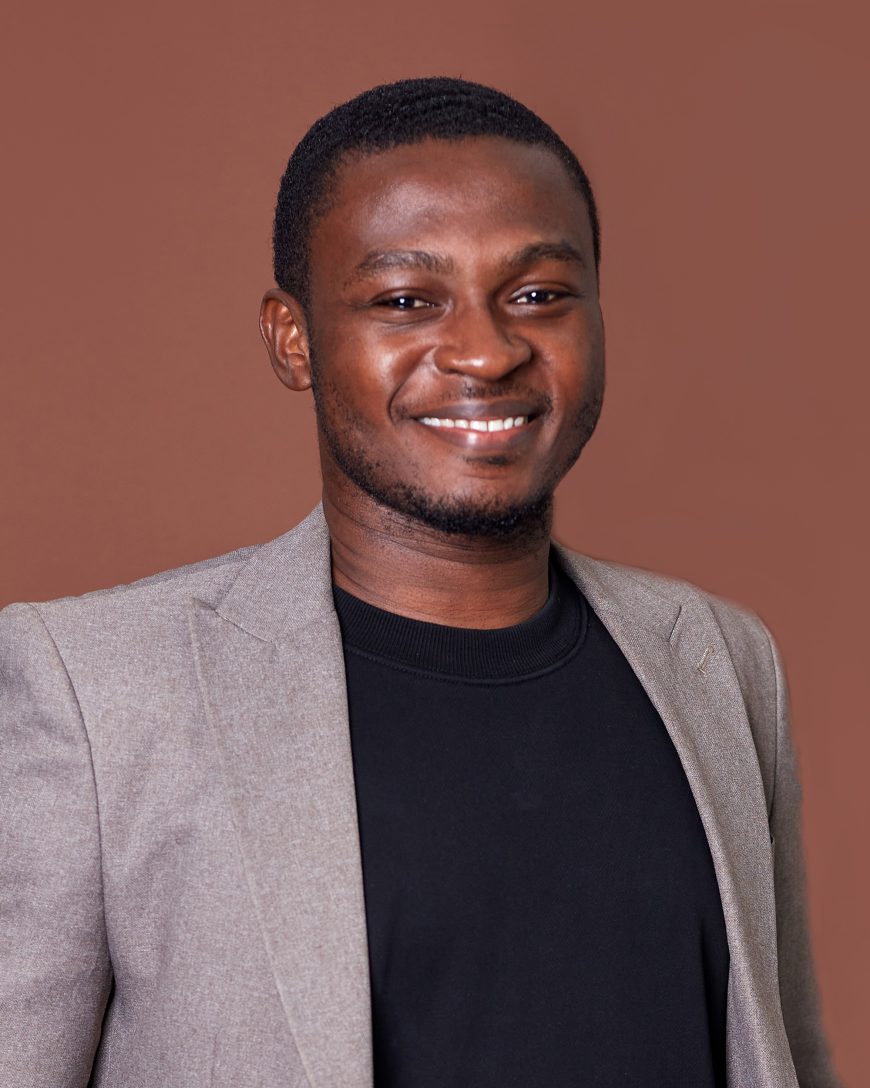
The Capacity Accelerator Network (CAN) is building a workforce of purpose-driven data and AI practitioners to unlock the power of data for social impact. Passionate about health, agriculture, and sustainable development, CAN Africa Fellow Dan Poku has dedicated his career to creating innovative solutions for critical challenges in these sectors.
Tell us about your engagement with data.org’s Capacity Accelerator Network (CAN) and which program you took part in. What did you do before joining this program, and what do you do now?
I’m from a computer science background. And for the past seven to eight years, I’ve been working with companies in the food and agriculture sector to mainly building data solutions for them. My last role was with an enterprise support organization called True Foundry Inc. I was wearing two hats here: operations lead and the tech lead. In this capacity, I supported startups incubated by the Ghana Climate Innovation Center (GCIC).
As a CAN fellow, I am working on leveraging climate and health datasets to develop a cloud-native machine-learning application to predict respiratory health outcomes in Ghana.
I come from a tech background, but I was dealing with epidemiology, climate science, and public health. The fellowship gave me exposure to all this and reminded me that I could lean on others.
Dan Poku Data Science Fellow Global Partnership for Sustainable Development Data (GPSDD)

How has your approach and work evolved based on what you have learned and observed from your colleagues across the CAN network? How are you applying your newly acquired skills in your work?
One of the highlights of this fellowship for me has been the cross-continental collaboration. It was so great to connect with colleagues working in completely different contexts but facing similar challenges. At the India conference, when I heard India CAN Fellow Anuja Venkatachalam present, I told myself: ‘I must speak to her because she’s doing something amazing.’ She wasn’t just focused on building applications; she was tackling the bigger problem of creating a solid data infrastructure that others could build on. It shifted how I thought about my own work. We later had a long call where she reviewed my project in detail. She asked tough questions, pointed out gaps, and pushed me to rethink my design choices.
Honestly, one of the biggest benefits of the fellowship is having that real-time validation. When a peer critiques your work and affirms or suggests ways to improve, it gives you a whole new level of confidence. A great example was with my synthetic health data. I thought it was just a workaround for the lack of data in Ghana. But Anuja encouraged me to treat it as a contribution worth sharing. That encouragement gave me the confidence to start writing a white paper and publishing my code for others. Since then, I’ve had researchers, including those from Ghana’s Statistical Service, ask to learn from my process. That was humbling and showed me the impact of building in a way others can reuse and learn from.
What motivated you to join this program within CAN? What specific challenges or opportunities are you hoping to address? How do you intend to stay connected with your peers and the wider CAN community?
I am surrounded by health professionals. All my siblings are health professionals, and we’re always having conversations about health when we’re together. It’s always about something that’s happening in the hospital or in the health space in Ghana. They drew me into their work, starting with tracking biomedical equipment across Liberia for my elder brother’s organization. Anytime an issue pops up, my antenna goes up. I’m very interested in getting to know what’s going on in the health and tech space. My passion also stems from where I live. I live at the foot of the hills to the northeast of Accra. Sometimes, you jog or walk up and see the whole city of Accra, and on other days, the haziness and poor visibility take that view away. This experience was a trigger to delving deeper into the significant health risks associated with air pollution. The work that I’m doing for CAN is because of this. I am using machine learning techniques to build a forecasting model to predict the incidence of respiratory diseases.
How was CAN’s interdisciplinary approach to data training helpful in driving impact in your work? How do you measure the success of using climate and health data to achieve desired impact outcomes?
Data is everything. You can’t build models without it, yet access to reliable data in Ghana is difficult. For something as important as public health, that felt unfair.
That’s where CAN’s interdisciplinary approach helped. I come from a tech background, but I was dealing with epidemiology, climate science, and public health. The fellowship gave me exposure to all this and reminded me that I could lean on others.
On the technical side, I’ve also grown a lot. Analyses that would take a week now take a couple of hours. But honestly, the biggest shift has been in how I measure success. The biggest impact is building an ecosystem around the data, getting stakeholders engaged, showing them what is possible, and pushing for open access. Now I ask, ‘Who am I working with, and how many doors are opening?’
Right now, I’ve established a working relationship with the Department of Physics at the University of Ghana, where I have been welcomed into their facilities, which run the country’s most advanced air quality sensor network, and offered opportunities for future collaboration. I’m supporting a public health institution with machine learning for their research. By the end of the year, my goal is to be engaged with at least six organizations. In that sense, CAN’s interdisciplinary model has been essential. It gave me the technical confidence to streamline data pipelines and the cross-sector insights to build trustworthy solutions. It pushed me to redefine success as contributing to a larger movement for open, reliable, and actionable climate and health data.
Using your skills in climate and health isn’t just work—it’s a quiet, powerful way to take a stand. It’s like holding a protest sign, but instead of being out in the street, you’re at your computer building solutions that say, ‘These tools should benefit everyone.’
Dan Poku Data Science Fellow Global Partnership for Sustainable Development Data (GPSDD)
What advice do you have for data and AI practitioners as they begin purpose-driven careers at the intersection of climate and health in Africa? Why should they apply their skills in the social impact sector?
Using your skills in climate and health isn’t just work—it’s a quiet, powerful way to take a stand. It’s like holding a protest sign, but instead of being out in the street, you’re at your computer building solutions that say, ‘These tools should benefit everyone.’
Right now, too many innovations in AI and data are locked behind paywalls or reserved for a select few. By choosing to work in the social impact sector, you’re helping to break down those barriers. You’re making sure that when we solve big challenges such as climate-related public health issues, we are creating solutions that are open, inclusive, and reach the people who need them most.
In Africa, the overlap between climate and health is real and urgent. Data gaps, resource limits, and rising risks mean every contribution counts. When you bring your technical expertise to this space, you’re not just coding models or cleaning datasets; you’re protecting communities, shaping better decisions, and giving vulnerable groups a fair shot at resilience.
So my advice? Jump in. Build tools that everyone can access. Work on projects that matter to people’s everyday lives. It’s one of the most meaningful ways to stand against gatekeeping and to make sure technology’s benefits are shared by all.
“5 Minutes with” series
These articles share the stories of people around the world leveraging data and AI to drive impact.