Most convenings are defined by what we learn. Learning new tools, new strategies, new opportunities for partnership. Learning, together, with our cross-sector peers.
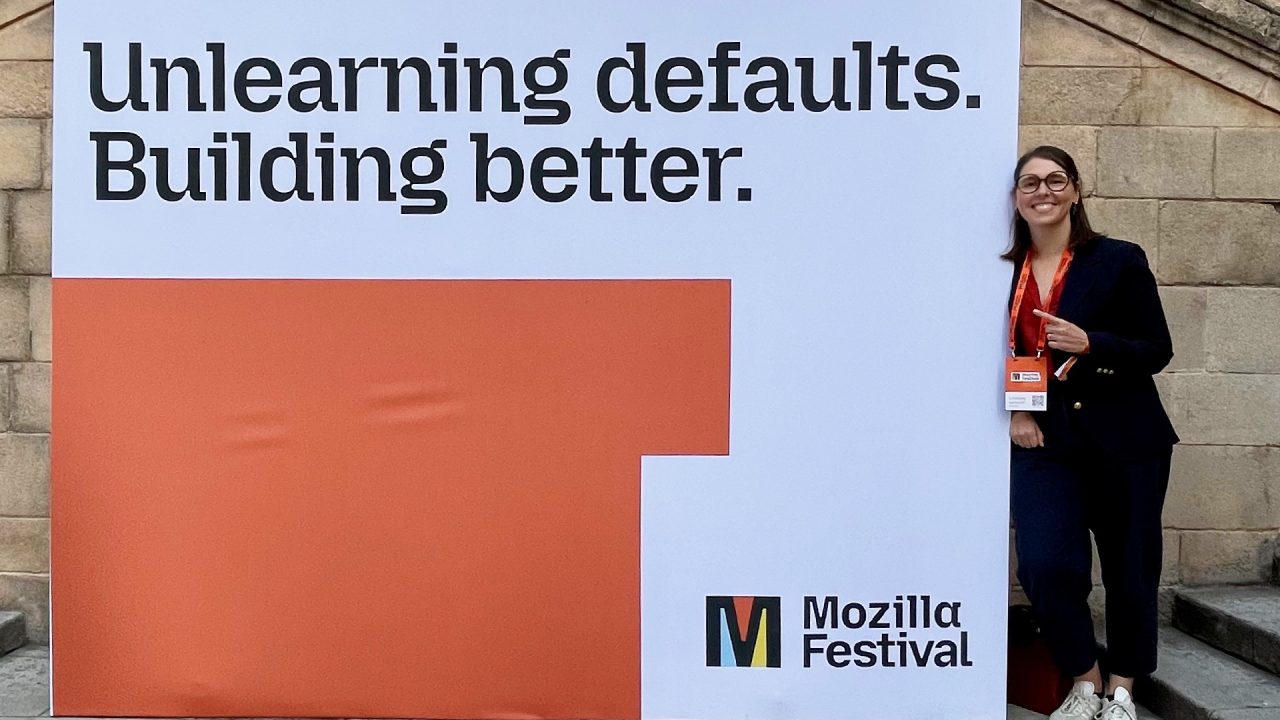
At the recent Mozilla Festival in Barcelona, the fireside chat I participated in was all about unlearning.
In conversation with Elise Montano, the director of measurement and impact at Caribou, we confronted the pressures of this current AI moment: preparing workers and organizations for AI requires meeting people where they are, while still moving with urgency to ensure workers and organizations are positioned to benefit from the possibilities ahead.
Across our conversation, we kept returning to three segments of the workforce who are experiencing the AI transition very differently: entry-level talent navigating the shifting AI landscape, higher-skilled workers confronting new data and AI roles, and social impact practitioners aiming to keep pace with technology. Each group has different starting points, but all three need accessible, context-specific pathways to build the skills that will help them navigate the changes ahead.
New Talent, New Skilling
AI is transforming jobs and livelihoods, but unevenly. A large share of workers in entry-level roles are now faced with the need to upskill as tasks and jobs shift or disappear altogether. Caribou has done fascinating research on the mix of optimism and concern among workers in the business process outsourcing (BPO) and information technology–enabled services (ITES) sector in Africa. The risks of automation are felt most acutely among workers who are young, female, or living in rural areas. And those fears are not unfounded, as there is evidence of people being displaced by AI. As Elise pointed out, AI’s negative impacts are amplifying existing fault lines and inequalities, hitting entry-level jobs first and hardest as AI raises the bar for skills, especially in digital literacy.
At the same time, many workers do not want to be passive. In the spirit of unlearning, we challenged the common understanding of how skills are gained. Caribou has found that in many cases, BPO/ITES workers are upskilling themselves, experimenting with tools for self-paced learning and productivity outside of formal training. When we turned the question back to the audience, we found a similar pattern. Many of us are learning on the job and piecing together new AI skills through experimentation. So how do we turn this individual drive into accessible, supported pathways so that more workers can gain skills, and we don’t leave large swaths of the population behind?
At data.org, we are committed to training one million purpose-driven data and AI practitioners, and we see clearly that workers are motivated by hands-on, applied learning. Even those who arrive through formal academic pathways seek opportunities to learn in context—working with real data, real problems, and real communities. We have an opportunity to rethink, or unlearn, how data science is taught: grounding it in community context, centering communication and storytelling, and creating experiential pathways that prepare people to translate data into impact in the real world. Through our Capacity Accelerator Network, for example, fellowships with hands-on work opportunities have made a significant difference, both for individuals applying new skills in local contexts and organizations learning and building internal capacity alongside them.
Emerging Roles, Expanding Careers
Alongside reimagining how we teach, there is an opportunity to design new roles that leverage data and AI. In our 2022 report, Workforce Wanted: Data Talent for Social Impact, data.org identified four different pathways into data and AI for impact: recruiting new talent, upskilling existing talent, career exposure for transitional talent, and professional development for leadership. Three years later, those pathways are still relevant. What has changed, however, is the emergence of entire categories of impact-focused work that are just now getting traction. Data-for-good analysts, AI ethicists, data-to-policy translators, social sector technologists—many of these roles didn’t exist a few years ago, reinforcing just how quickly things change in the era of AI.
As these new AI roles emerge, it is also important to recognize that the vast majority of the social impact workforce will not be stepping into new jobs. Within the roles they already hold, they will need the skills, support, and organizational readiness to use AI responsibly and effectively. Most people do not need to become data scientists—but they do need basic data literacy, to understand the risks and limitations of AI tools, the ability to ask the right questions, and the judgment to determine when technology supports the mission versus when it undermines human decision-making or simply creates inefficiency.
Accelerating, Intentionally
One of the challenges for the social impact workforce is that responsible, context-appropriate application of AI is not a single person’s role. It is a culture. Our audience polling underscored this: many organizations lack clear signals when it comes to AI adoption—uncertain policies, sporadic experimentation, a weak foundation of data maturity to build upon. Supporting an evolving social impact workforce requires investing holistically in people and the organizational culture that enables them. New skills, yes, but also clear governance, thoughtful workflows, and the space to learn and experiment safely. Ultimately, it requires unlearning a tech-first mindset, where technology dictates the direction, and replacing it with a culture where purpose, practice, and people lead the way.
These shifts are real, and they are happening quickly. So how do we move fast but with intention?
Whether you’re a new or seasoned professional navigating shifting workforce realities or a social impact organization looking to tap into the power of data and AI, this landscape can feel overwhelming, especially at the current pace of change. There is so much to learn—and so much to unlearn—about how data and AI can work for you. But if we stay anchored in local needs, local context, and local capacity, AI, when wielded responsibly, can improve livelihoods and drive meaningful social impact.
About the Author
As Vice President of Strategy and Partnerships, Lindsey Gottschalk works at the intersection of strategy and operations to strengthen the collaboration among partners and scope and implement new initiatives.
Read more