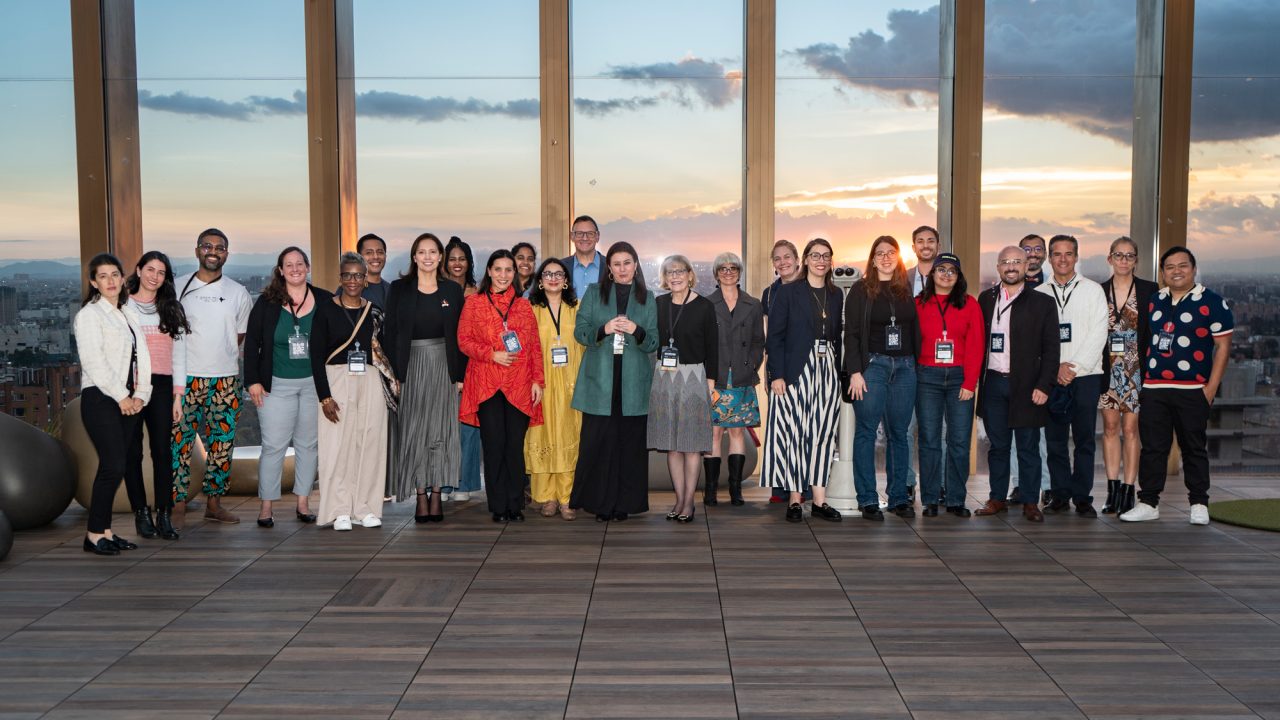
Two years ago, academics, funders, industry partners, and leaders from social impact organizations around the world came together at Harvard University for the first Accelerate: Data and AI for Social Impact Conference. We collectively discussed what data for social impact is and its potential to bring transformative solutions to the sector.
One year ago, we released Accelerate What’s Possible: The 2025 Data and AI for Social Impact Report, which acknowledged a shift from the question of what to the question of how—the practical strategies, tools, and training that are driving meaningful change.
And this year, in Bogotá, Colombia, 4,100 kilometers away from our inaugural convening, the 2026 Accelerate Conference reinforced the incredible momentum of that shift.
data.org and our partners around the world are accelerating impact by leveraging data and AI in ways deeply anchored in community needs and opportunities. We are learning quickly what works and, through partnerships and collaboration like those that Accelerate seeks to foster, we are working to scale solutions to reach and help more people than ever.
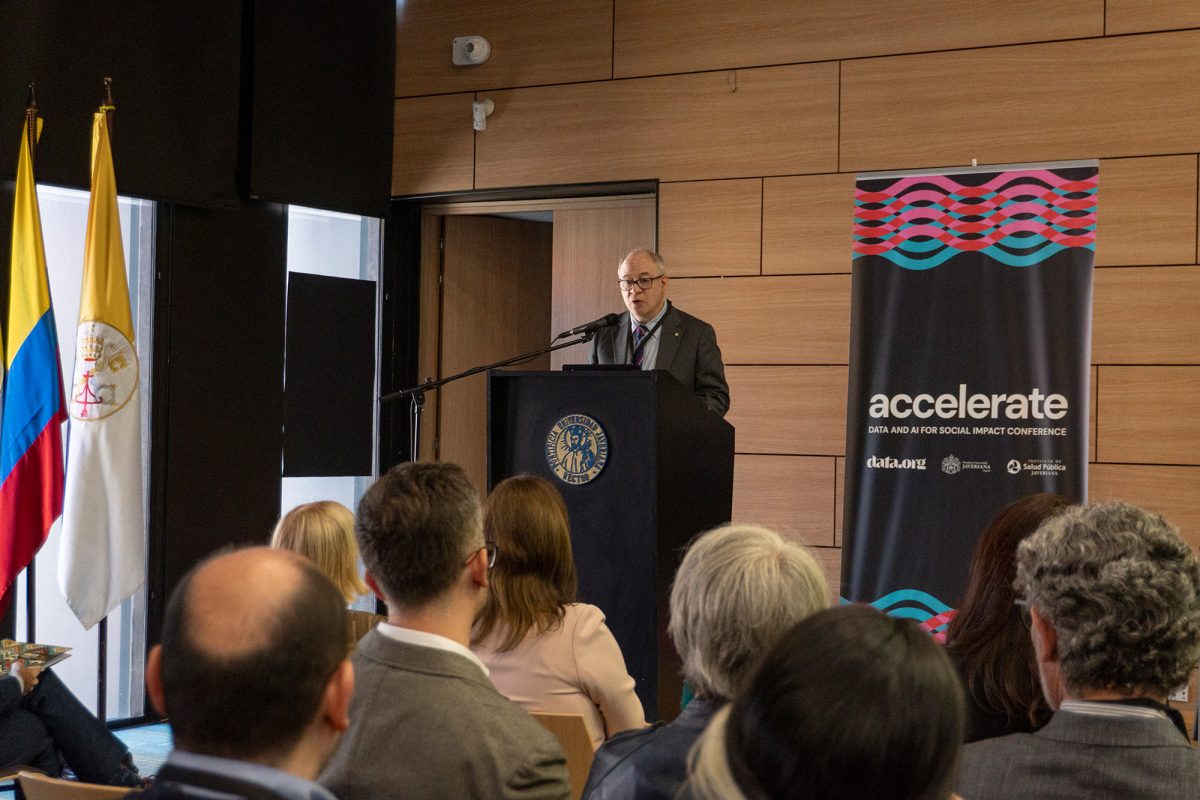
“Our shared mission of serving the most vulnerable is the same—it’s how we do it that has evolved. Data and AI are the new tools to achieve our important goals and create a more just society,” said Luis Fernando Múnera Congote, rector of Pontificia Universidad Javeriana.
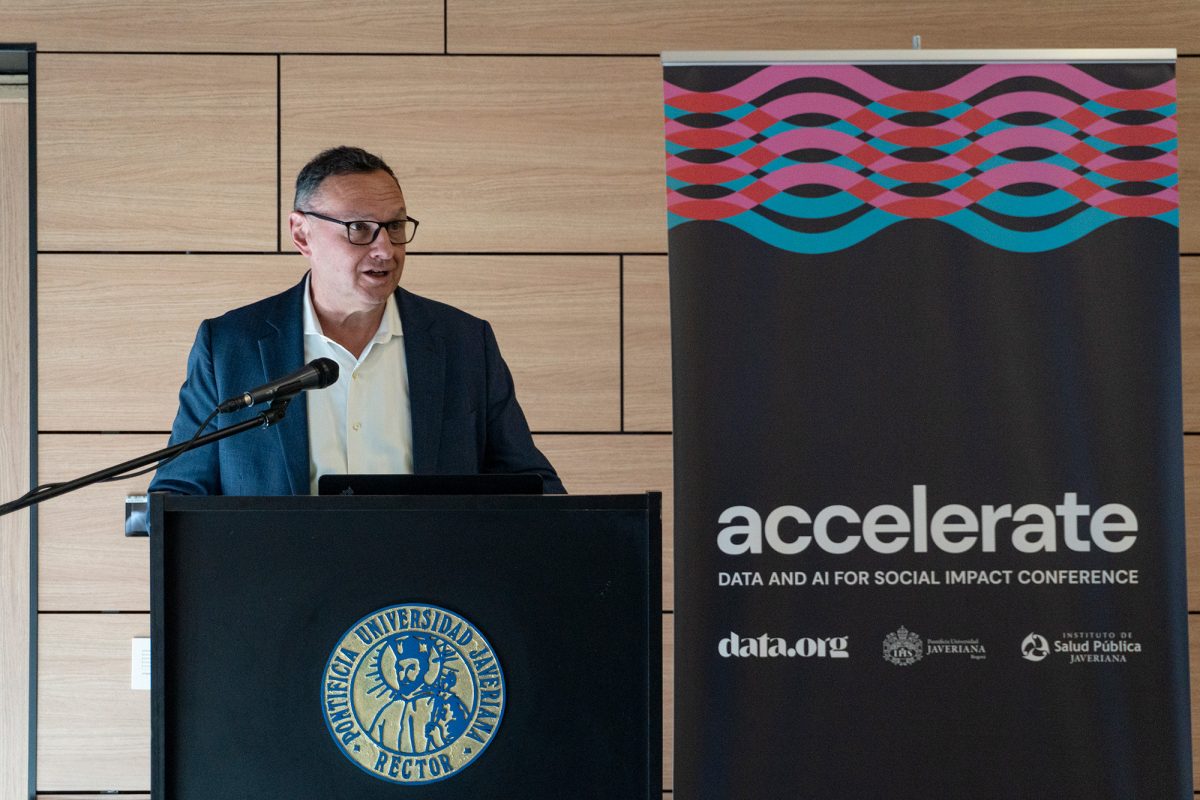
Javeriana, a Jesuit university that was founded more than 400 years ago and is committed to social impact and shaping leaders with critical thinking, provided an appropriate and beautiful campus setting as the host site for this year’s conference. The conference kicked off with a local Colombian musical performance, and then delivered compelling panels, lightning talks with highlights of best practices, and remarks from key leaders like Lyana Latorre, vice president of Latin America and the Caribbean for The Rockefeller Foundation, and Lance Piece, data.org’s new president and CEO.
The multi-sector conversations illustrated the importance of bringing diverse perspectives to the table to develop sustainable and scalable solutions—especially when tackling complex challenges like financial inclusion and public health, issues that are impacted by everything from data access and digital literacy to the lack of digitization of local languages in LLMs.
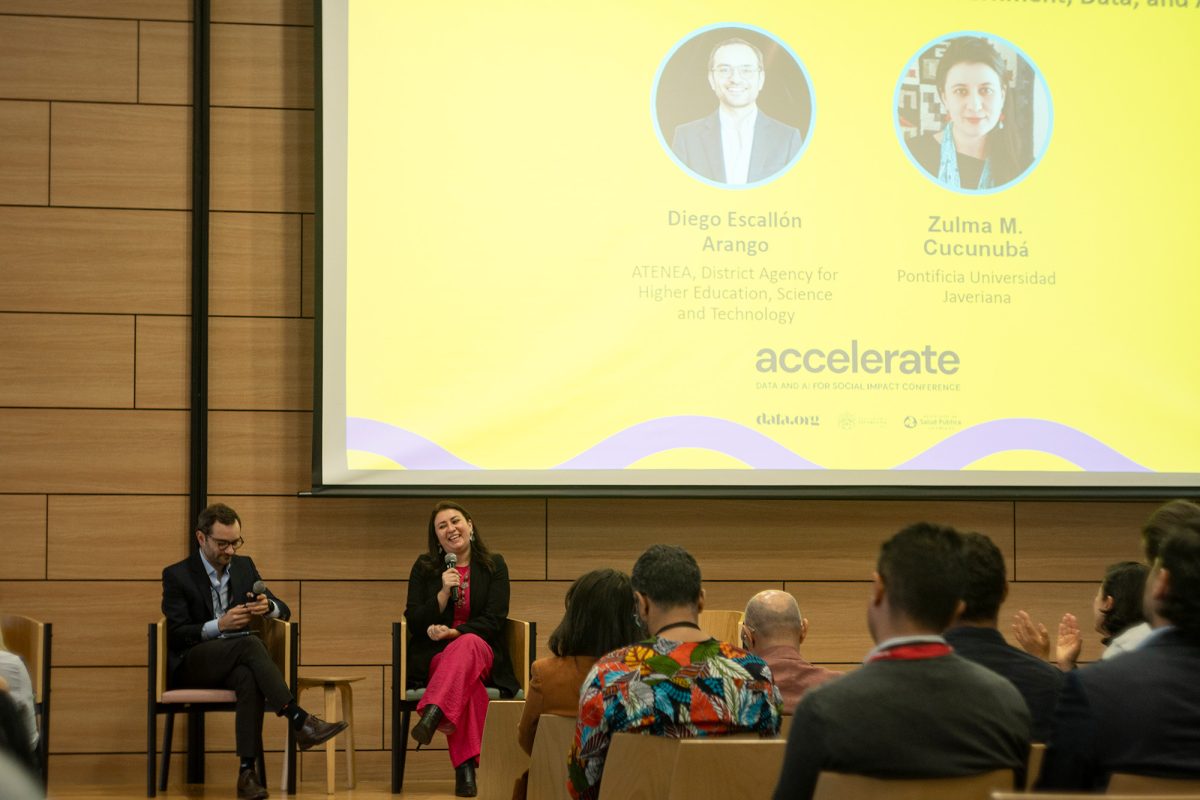
At an event where tech looms large, one of the consistent themes was the importance of the humans in the loop. Zulma Cucunuba, director of the Instituto de Salud Pública at Javeriana, touched upon this topic during a fireside chat with Diego Escallón Arango, general director of Atenea, District Agency for Higher Education, Science and Technology. Their conversation, Building the Workforce of Tomorrow: Government, Data, and AI, set the stage for themes built upon by multiple speakers throughout the day.
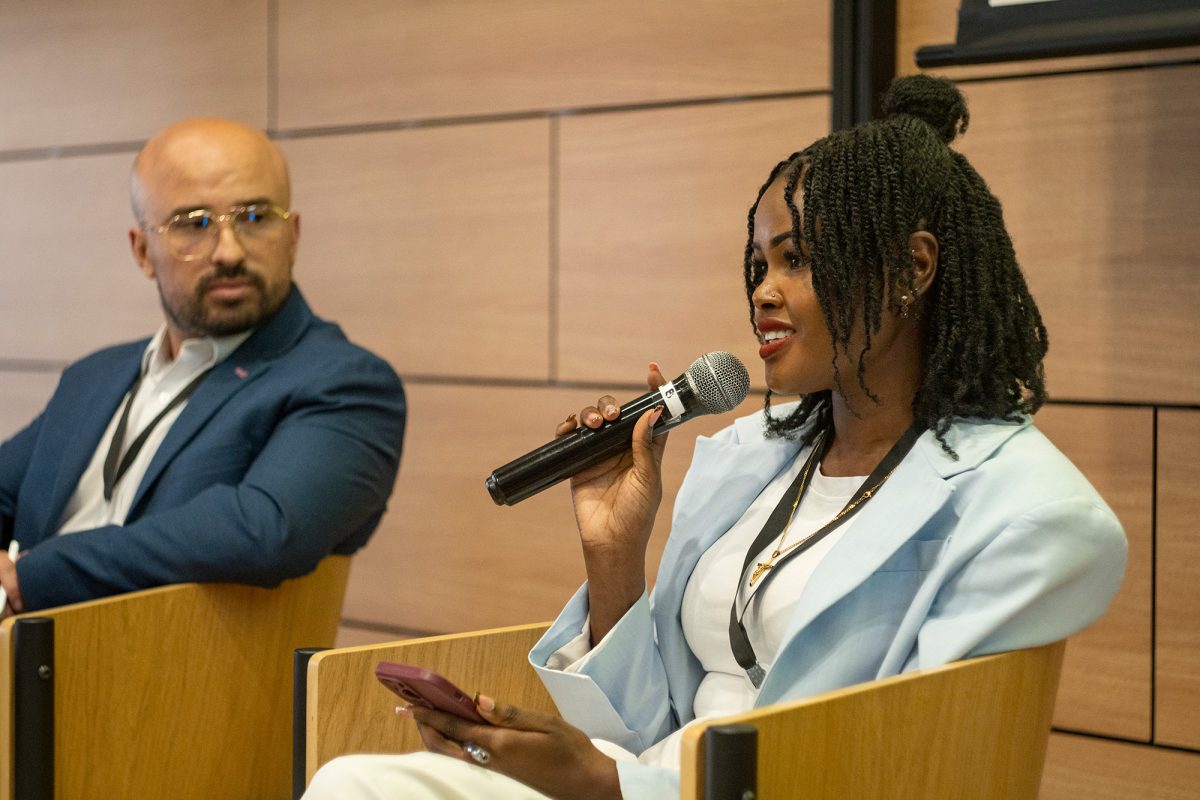
“Technical skills can build AI but only human skills can build trust,” agreed Florence Nguuni, a data science fellow at the Global Partnership for Sustainable Development Data. “Data tells us what is happening but the community tells us why it is happening.”
The agenda for Accelerate showcased not only a diverse set of perspectives and contexts, but the various workstreams and value-adds that data.org brings to the sector—including through fellows like Florence. Speakers also represented the Capacity Accelerator Network, our growing resource library, and our global innovation challenges.
Ivana Feldfeber is the co-founder and executive director of DataGénero. She is a past challenge judge and her organization, which works to generate and make accessible quality gender-sensitive data, co-authored with us the Gender Data and Climate Playbook. During a panel on building resilience at the intersection of health and financial inclusion, she emphasized the importance of humans in the loop and of data being maintained and leveraged by the people it’s about.
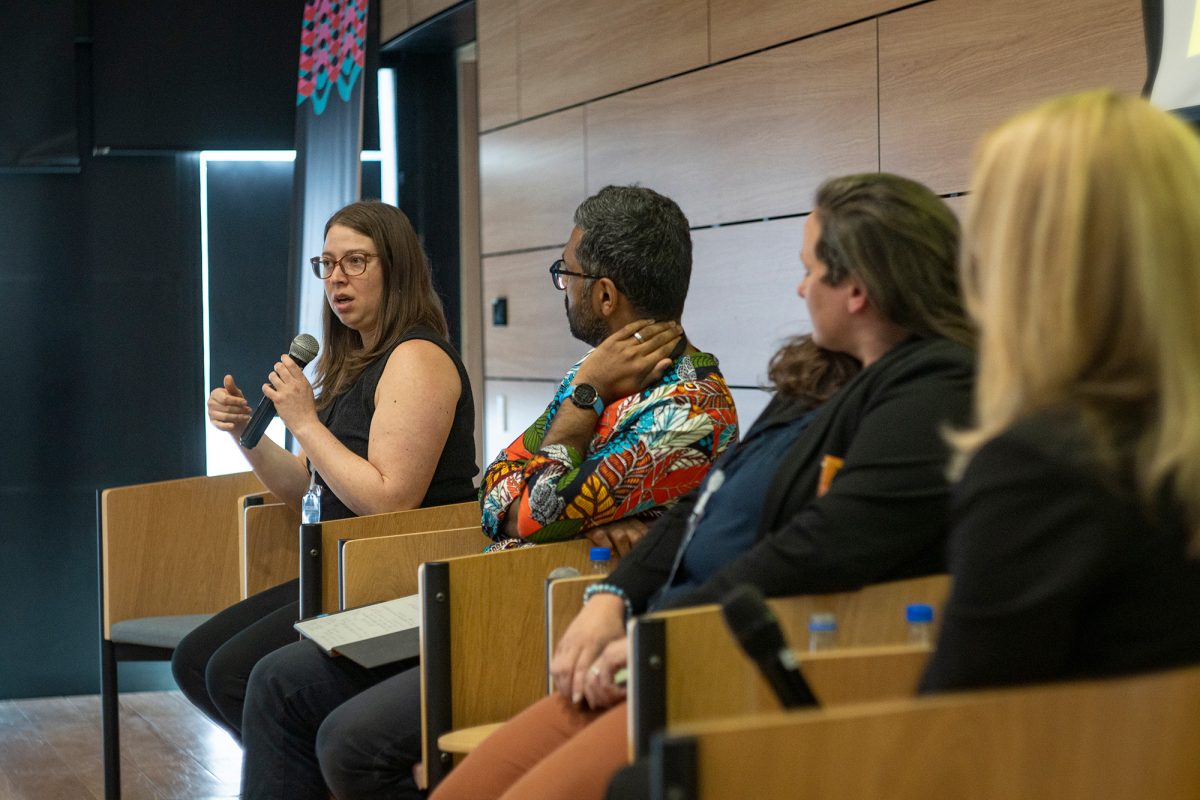
“Some communities don’t want to be measured, they don’t want to be counted. What happens when that data falls into the wrong hands?” she asked. “I would love more data but more secure data so that nobody can do harm with it.”
That balance, she said, is important to strike. Perry Hewitt, chief strategy officer at data.org, called philanthropy “a strategic investment in humanity,” as she moderated a panel of funders who seek to strike that balance in their grantmaking.
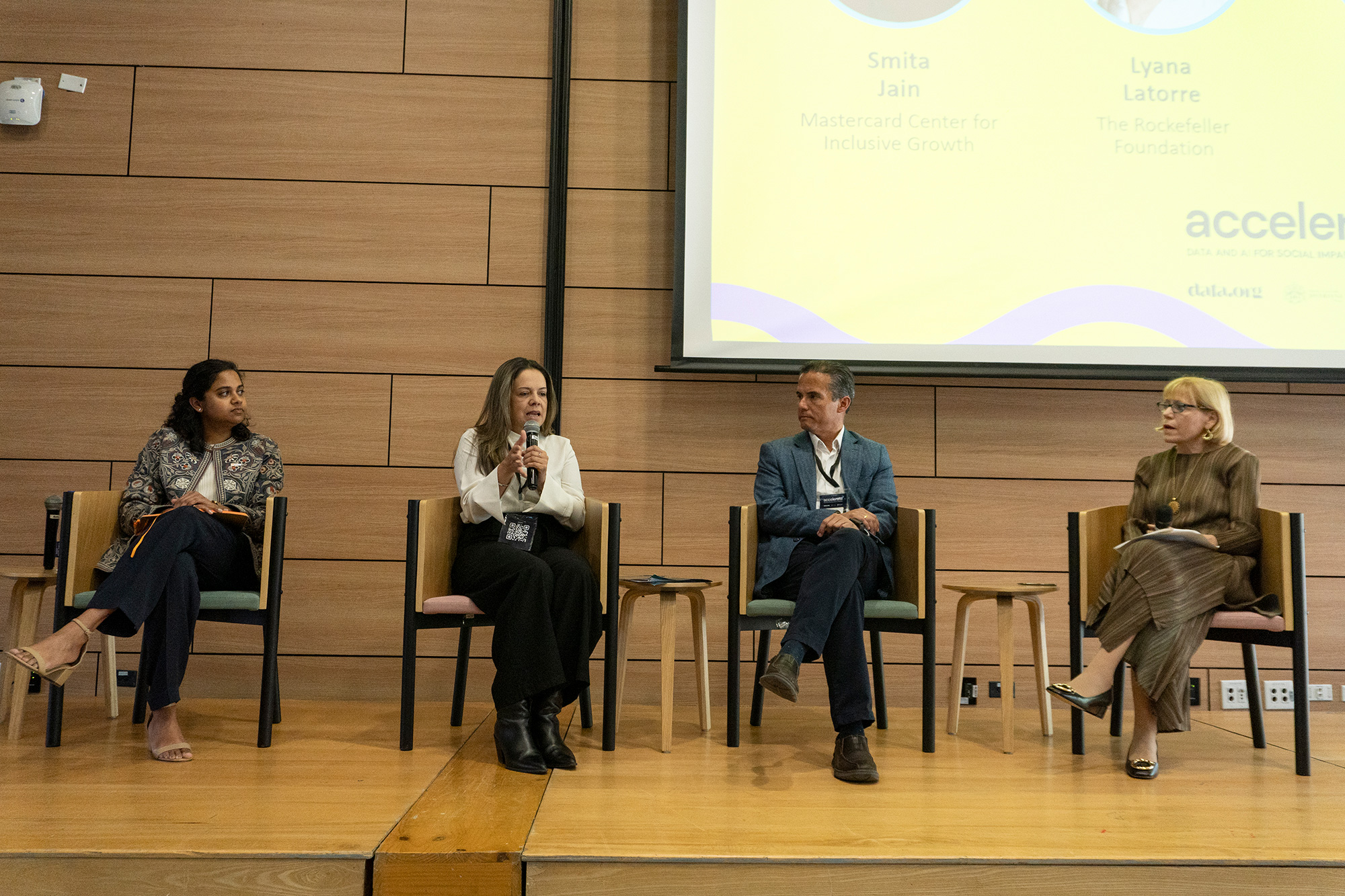
Smita Jain, director of Inclusive Innovation & Analytics at the Mastercard Center for Inclusive Growth, underscored the “caution and care” needed to work in the social sector. In conversation with Latorre and Fernando Rodriguez, the Americas regional solutions grant leader at Cisco, Jain and her colleagues agreed that data and AI in the social sector is more nuanced and complex, but the potential benefits are extraordinary.
To fully realize those benefits, Accelerate reminded us that more must be done. AI has allowed us to reimagine what’s possible. Change is accelerating faster than we could have imagined. Yet work must continue to ensure solutions are developed with community and deployed with respect for the local context.
“Scaling is not replication,” Nguuni said. “A common mistake is trying to scale a solution, when the real opportunity is scaling the principles. Sustainable change happens only when local stakeholders see themselves reflected in the solution.”