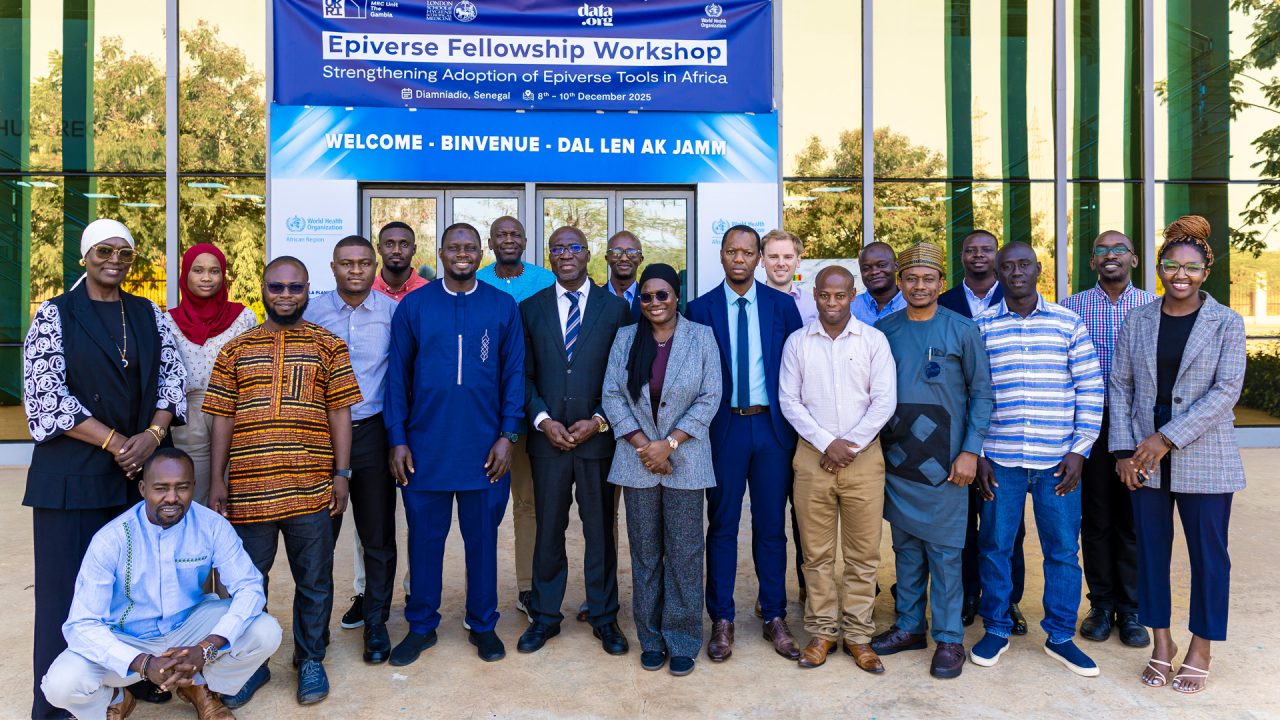
In December 2025, Epiverse Fellows from ten African countries convened at the WHO Regional Office for Africa (WHO AFRO) Hub in Diamniadio, Senegal, for a pivotal three‑day workshop marking one year since the launch of the Epiverse Phase 2 in Africa. Under the theme “Strengthening Adoption of Epiverse Tools in Africa,” the gathering served as both a milestone and a springboard—consolidating a year of learning while shaping a unified roadmap for the future.
Over 2.5 days, fellows and partners from the WHO AFRO, the Medical Research Council Unit, The Gambia at the London School of Hygiene & Tropical Medicine (MRCG at LSHTM), ministries of health, and the Epiverse training and development teams engaged in collaborative reflection, technical deep dives, and strategic planning. The workshop’s timing—just as fellows prepare for their mission to champion Epiverse tools at the national level—made this an essential moment to strengthen identity, alignment, and purpose.
Building a Stronger, More Coordinated Cohort
A central aim of the workshop was to reinforce the fellowship as a cohesive Pan‑African cohort. Using the Forming–Storming–Norming–Performing framework, facilitators created space for fellows to reflect on their collective identity, discuss working styles, and negotiate norms for collaboration.
Beyond team‑building exercises, the workshop structure—blending plenary sessions, peer presentations, and small‑group tasks—intentionally fostered trust, accountability, and cross‑country camaraderie. By the closing session, fellows reported an enhanced sense of shared mission and greater clarity on how to support one another during the next year of implementation.
Deepening Technical Mastery of Epiverse Tools
A highlight of the workshop was the series of deep dive sessions led by Epiverse developers and trainers. These sessions focused on:
- Early‑stage epidemiological tasks using cleanepi, readepi, and simulist
- Mid‑stage analytical workflows supported by epiparameter, superspreading, and cfr
- Late‑stage modeling tasks leveraging epidemics and complementary tools
These technical explorations were paired with highly interactive exercises such as the Tool Capability‑Limitation Matrix, Need‑Tool‑Friction Sheets, and synthesis discussions that mapped country needs to specific Epiverse capabilities. Fellows also practiced filing GitHub issues—strengthening the feedback loop between African users and global developers.
The result was not only improved technical competence but also a clearer collective understanding of how Epiverse tools can be tailored, scaled, and embedded across diverse public‑health settings.
Surfacing Cross‑Country Insights and Continental Patterns
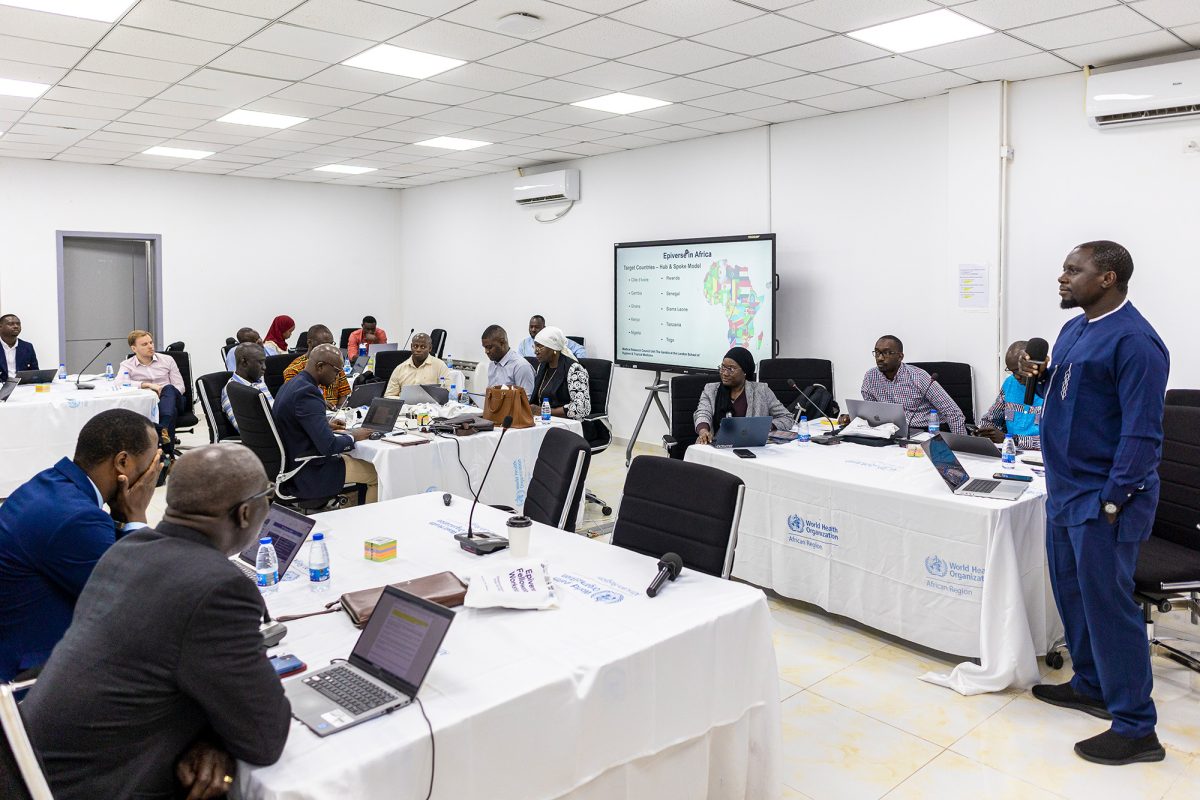
Prior to the workshop, each fellow conducted a national needs assessment survey. Day 1 brought these findings to the forefront, with fellows presenting key insights on surveillance systems, analytical capacity, data‑workflow gaps, and priority public‑health challenges in their countries.
These discussions were enriched by contributions from:
- WHO AFRO technical teams, offering regional perspectives and alignment with continental priorities
- Training partners from TRACE-LAC sharing lessons from localizing tool adoption in non‑African contexts
The resulting landscape painted a striking picture: despite differences in resources and structure, many African countries share common bottlenecks—data cleaning complexity, limited analytical pipelines, challenges with interoperability, and insufficient transmission‑modeling capacity. This convergence provides fertile ground for joint problem‑solving and coordinated tool deployment.
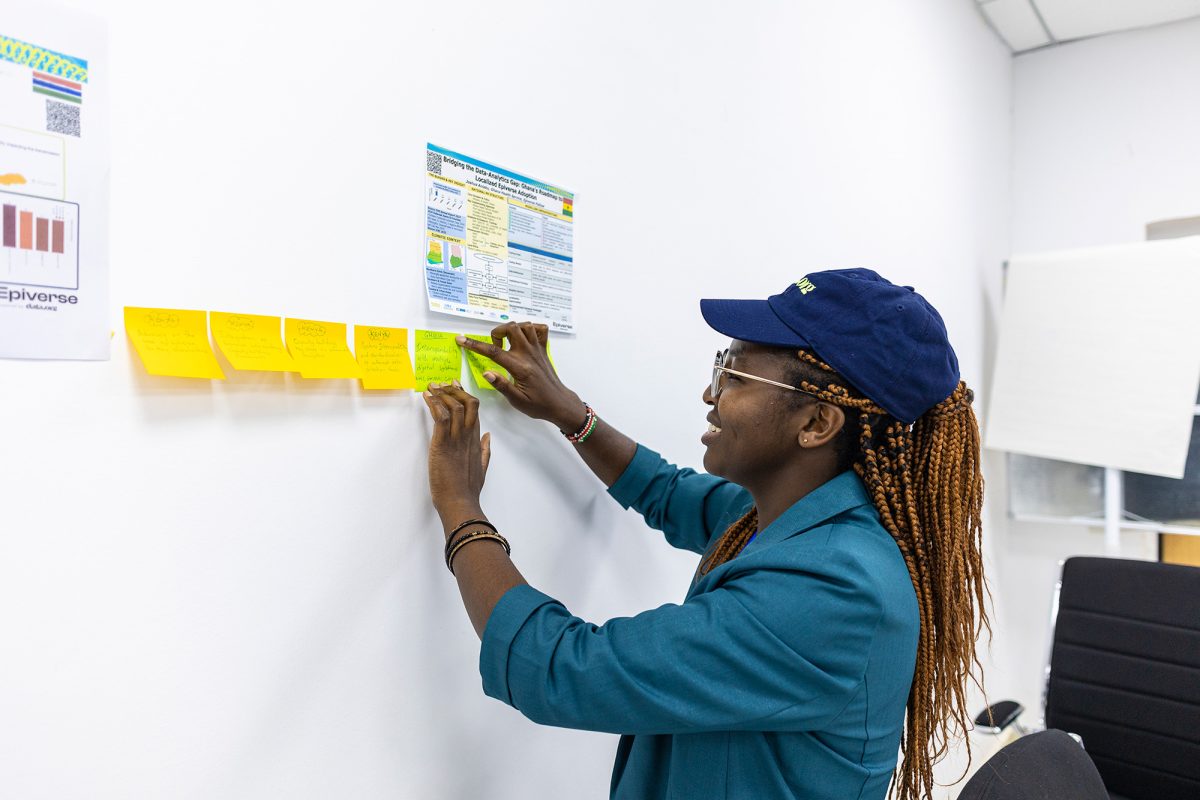
Central to this Day 2 workshop’s strategy was a clear commitment to local ownership and contextual adaptation. Moving beyond one-size-fits-all approaches, discussions emphasized that technical tools and training must align with national ecosystems, institutional realities, and operational constraints identified through the needs assessments. By centering the lived experiences of country representatives, the approach prioritized the localization of data governance and the integration of tools into existing ministry workflows rather than imposing external structures. Collaboration with TRACE partners to adapt training materials and implementation strategies further reinforced this direction. By prioritizing local ownership, Epiverse ensures that analytical tools designed for epidemic and pandemic preparedness and response are embedded within national frameworks, making them sustainable, resilient, and directly responsive to the public health priorities identified by fellows in their respective countries.
Crafting National Roadmaps and a Pan‑African Collaboration Vision
Day 3 of the workshop focused on translating insights into action. Fellows worked through a structured roadmap‑development process centered on:
- SMART goals for national tool adoption
- Country‑level mission and risk statements
- Draft adoption blueprints mapping priority tools, partnerships, and timelines
- A Pan‑African Collaboration Statement, articulating how fellows will coordinate across borders
- Commitment Annexes outlining each fellow’s three major goals for 2026
This structured process yielded concrete, implementable outputs: a consolidated continental roadmap, country‑specific adoption strategies, and a shared framework for ongoing collaboration.
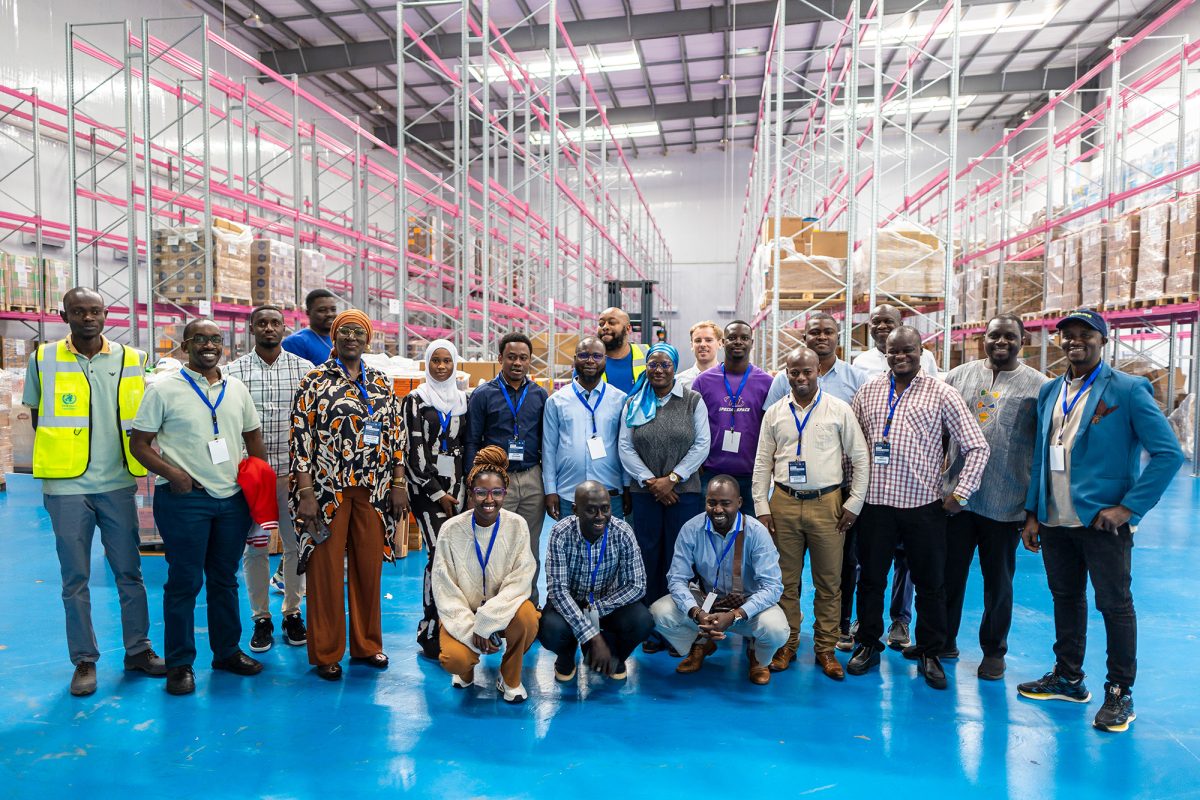
Looking Ahead: A Stronger Network, a Clearer Mission
As the workshop concluded, partners reaffirmed the importance of sustained coordination and governance for the Epiverse Fellowship. Updates from data.org and the training teams outlined the structures that will guide the next phase of engagement and ensure continued alignment between fellows, developers, and regional institutions.
One year in, the Epiverse Fellowship has not only strengthened technical capacity but also laid the foundation for a durable network of African practitioners working toward a common goal: accelerating the adoption of trusted, interoperable, open‑source tools for epidemiological analysis across the continent.
With a strengthened cohort identity, shared roadmap, and clear channels for collaboration, the fellows are now well‑equipped to drive forward national and regional impact in the coming year.