Curated conversations with data and AI for social impact leaders on their career journeys
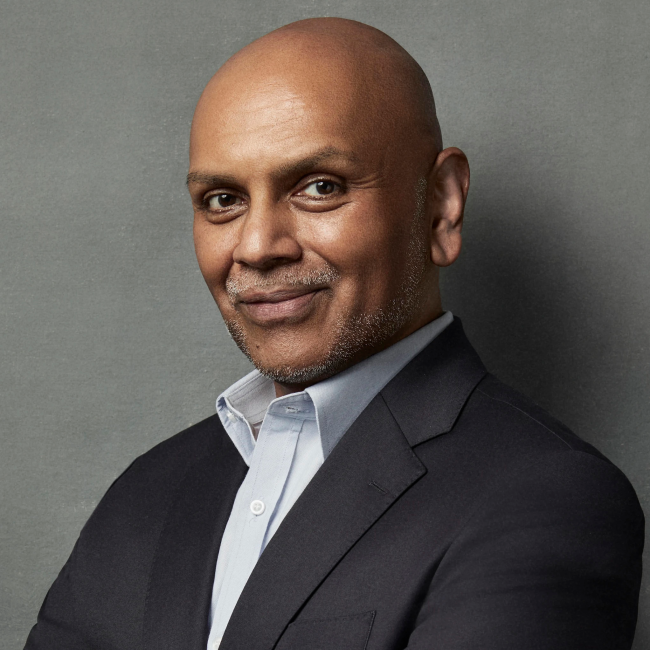
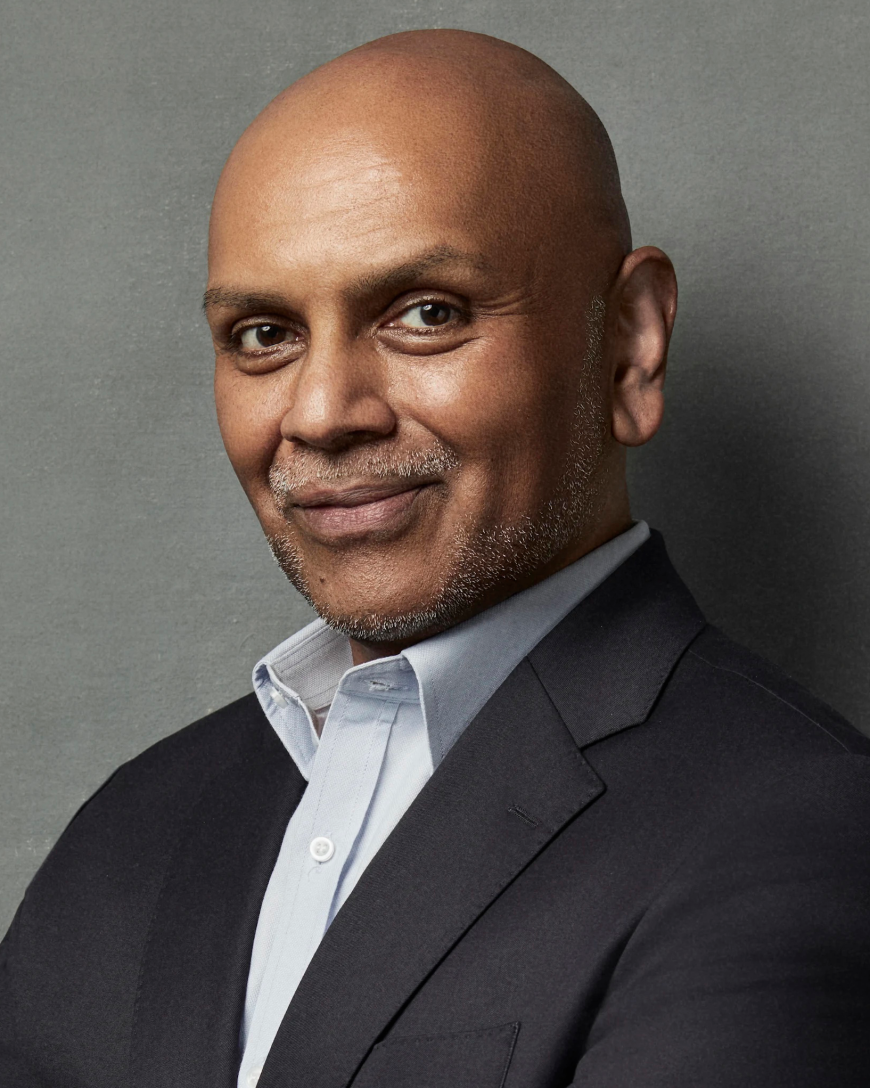
Pathways to Impact is a series of conversations with data for social impact leaders exploring their career journeys. Perry Hewitt, Chief Strategy Officer of data.org, spoke with Joseph D’Cruz, the Chief Executive Officer at the Roundtable on Sustainable Palm Oil (RSPO), the world’s leading platform advancing sustainable palm oil. He leads global efforts to transform the palm oil industry by integrating economic development, environmental protection, and social equity.
How did you come to do social sector work?
A little bit by circumstance, chasing things that interested me, and maybe a little bit subliminally by family influence.
The 30-second recap: after university I started in the commercial world, in management consulting. Then I drifted into more community and social work—development planning, feasibility work—first with a big consulting firm, then on my own with a couple of partners, then a lot of freelance work. That drift carried me into the development system, the UN, and big international NGOs.
The subliminal part was family. My now-departed elder sister was an environmentalist. My late father was a social activist in labor and trade unions, among other things. In hindsight, purpose-driven work resonated for a reason. But it was never a conscious career path—I just kept selecting for things I found interesting. I had the luxury of an upbringing that allowed me to do things with meaning; for that, I am grateful.
When did data and AI first come onto the scene for you?
Oddly enough, quite early in life I was intrigued by computers. I never went down computing as a career path, but I fooled about on my first Apple II PC at 14 or 15.
I enjoyed the early days of the internet but data was the real point of engagement—data and digitalization. At the UN Development Programme, doing global work on strategy and how you build a development organization for the world as it is today, there was a recognition, with my boss Achim Steiner at the time, around 2017 and 2018, that digitalization was going to be critical. So much of what we’re trying to do is built on having credible, usable, analyzable information, but that digital layer has been part of my thinking for how we build these systems and structures for over a decade.
The AI piece came much more recently, when we started to see genuine potential for AI as an analytical layer on top of the digital stack. In our organization’s work that’s only gained serious traction in the last nine to twelve months. Before that it was interesting to track, but not mature enough to build into our operational systems.
Part of the Pathways to Impact series
So, how have you driven AI adoption at RSPO?
It’s very much a work in progress across two dimensions.
First, the space is evolving rapidly, so the mistake we tried to avoid was the traditional corporate move: run a big procurement and standards process, land on an infrastructure solution, and declare that written-in-stone machinery for how we use AI. Operationally we use Gemini because we’re a Google shop. But rather than policies saying you must use them in this way, we set out very simple guardrails. Here are the tools: In your role, test and experiment and imagine how you can use them to make your work better.
We also delivered guidelines which are about common sense, particularly on data. We are custodians of data that belong to our members, and those members are everything from large global corporations to smallholders in Indigenous communities. So anytime you think about putting a piece of data into an LLM, ask yourself: is this data we have the right or the authority to put into a system? Would our members be comfortable with us inputting this information in the way it is? Should we anonymize it? Filter it out? Not put it in at all?
The second dimension is that when people find useful solutions, they share them. Rather than a designed, top-down approach, we’ve built more of an emergence mechanism, where people who are interested and willing test and find solutions inside a gated sandbox then bring them back. The governance layer on top is our digital and tech and leadership teams watching to see what should be replicated and ultimately institutionalized.
That’s a culture we’ve had to work at, because organizational systems have incentives pushing the other way. Always, some people would be happy to follow and be told what to do. But in any large organization there’s sure to be a cohort glad to lead given the opportunity.
It’s early days—we only started rolling this out organization-wide in the last six months, backed by structured training through a series of online webinars and courses. The early indicator I was happy about was the turnout! For an organization of about 200 people, we’re getting 170 or 180 at optional webinars. That was a wow moment, because it’s completely emergent. Nobody’s forced to attend.
Rather than a designed, top-down approach, we've built more of an emergence mechanism. It's a gated sandbox approach rather than a top-down design approach.
Joseph D’Cruz CEO Roundtable on Sustainable Palm Oil (RSPO)
Part of it is that the leadership team models the use of these tools. There’s often hesitation about admitting you’ve used AI to clean up a document—it feels unprofessional. But we’re a very global organization, and several people on the leadership team quite openly say, my written English isn’t perfect, so I’ve used these tools to improve the clarity of my communication, and that’s fine. Seeing that makes it easier for everyone else to say: as long as I’m accountable for the content, which we’re all clear that we are, getting an AI tool to polish my English is perfectly reasonable.
We also work in multiple languages, so we’re using these tools to translate across Indonesian and Spanish and Thai and others as a first cut for internal review. For example, when we get a letter in Spanish from a smallholder in Latin America, rather than waiting for the Latin American team, colleagues can run it through an AI, get the gist, and start on a response without the backlog of a formal translation.
Was there concern among staff that this was the beginning of replacing people?
It came up early, especially for colleagues whose work is somewhat reproducible. We do a lot of transactional processing—certificate renewals, membership applications, comms material. People in those functions look at the wider marketplace and worry: does this mean cutting headcount and replacing people with AI?
My answer has always been simple. We run a lean organization. There is more work for us to do than we have people for, especially when you think about our mission of what we want to build and what we want to become. So we are always going to find more high-level, analytical, meaning-making, creative work for you to focus on as you offload transactional work onto these processes.
That signal matters, because whether you say it or not, there’s real worry right now—driven by what people see at the big companies—that all of this is a stalking horse to suck the knowledge out of their minds and replace them with an LLM subscription. Which I think is going to be catastrophic for organizations. Some companies are almost blatantly telling people, we want you to train this AI system with all your knowledge, dot dot dot, leaving the rest unspoken. That’s a horrible culture to build.
Thirty years ago, that was training your colleague in another country to do your job.
Absolutely. People have seen this particular playbook before, and I don’t think we trust corporations enough now to be holding their workers’ best interests at heart.
We’ve been conscious of explicitly calling that out—not with platitudes, but being direct that we see value in having them here, because these tools let them take on much more of the higher-value, high impact work we’ve always known we need to do. We are nowhere close to being overstaffed relative to the scale of change we’re trying to make in the world.
Which skills, not necessarily related to data and AI, have helped you in your career?
Starting at the bottom of the stack: analytical skills. Not the transactional kind, which is where everybody starts, but being able to discern signal — meaning-making, which is the word I use a whole lot these days. AI systems can crunch data. Attributing meaning to it, which has a lot of implicit values in it, is a big part of what people need to do in leadership positions. And the emergence of AI has clarified that distinction. You can’t hide behind the analysis anymore when ultimately your job is to attach value to a decision and discern what’s meaningful in it.
The other skill, which came up implicitly as I moved along, is weighting interpersonal communication much more heavily. We’re a membership-based, multi-stakeholder organization working in the nonprofit space, so a huge amount of what we do is articulating, persuading, motivating people to help us make the changes we want. In my experience, we haven’t cultivated those skills enough in people. And we’re going to reach the point quickly where people intuitively spot the difference between machine-generated and human-generated communication, and value what feels authentic a great deal more. I spend enough time at conferences now to immediately pick out someone who has an AI-generated deck and read it for the first time half an hour before the session. The content might be great—but I’m sitting there for 20 minutes thinking, you could have just emailed me the deck. Whereas when you meet people genuinely, in a very human way, trying to relate experience and belief and context, that resonates.
What community of people or resources bolsters your work?
Working in the sustainable agriculture space, the work on an hour-to-hour basis spans everything from engaging with the biggest corporations in the world—the Unilevers and Walmarts and banks—to working with local farmers, Indigenous communities, and local activists in producing countries: Malaysia, Indonesia, Honduras, Ecuador, Colombia, Ghana. What drives me is the mix of both. We stereotype large corporations as faceless, but it’s genuinely heartwarming how many people inside them are trying to do something meaningful. That’s one constituency that I draw a lot of energy and belief from.
And then, more directly, the people on the ground. That’s where you see that all the structure and process and workflow we engage in really does change lives. In the agriculture space, working with palm, we’ve seen communities lift themselves out of poverty within a generation, because they’ve developed a decent, dignified, dependable income from this product. Just a couple of days ago a Guardian journalist wrote about a field trip in Colombia, visiting some of our members — smallholder groups in communities that used to grow coca for cocaine and transitioned to palm. Those people see and are talking about a significant change in their lives.
Corny as it may sound, what I take from the wider ecosystem is seeing how people in very different parts of the global supply chain hold a shared belief in doing something that makes lives better. That drives my own team too. I have incredibly smart people who I absolutely know could earn more money elsewhere. They turn up because this is one of those rare places that lets you do something every day that makes a tangible difference on the ground.
What have been some of the challenges in your career?
I hesitated on that, because I tend to feel a lot of gratitude. You sometimes get asked: if you could go back in time, what one thing would you change? My answer has always been absolutely nothing, because it’s the sequence and combination of everything that got me here, and I’m happy where I am.
That said: working internationally has been an incredible opportunity, and I’m truly blessed by the privilege of it. But there are downsides in the kind of community you can build around yourself. You end up with a very broad network of friends in many places, which is wonderful. The flip side is you don’t tend to have people who’ve been popping in and out of your kitchen for 30 years, simply by nature of not being in one place that long. It’s a trade-off—not worse on either side, but definitely different, and something that anyone who pursues this kind of work needs to recognize.
The other thing I’m sensitive to is that in the purpose and impact sphere, the work is unremitting and yet often feels as though you’re losing more ground than you’re gaining. Environmental conservation, climate change, disadvantaged communities, sustainability — if you look critically at the balance sheet, in most of these areas globally you’d say we’re worse off than we were 20 years ago. So I meet people who ask whether it’s all worthwhile. All this effort, all the things that we and our community of people do, and what difference does it make if the world is worse off than a generation ago?
My answer is twofold. First: what would the world look like today if we hadn’t made this effort? And second, at an individual or team level, we need to focus on the places where we are making a positive impact. You may not be changing the entire world, but you can point to communities that are better off, landscapes that are more sustainable than they would have been otherwise.
That matters, especially over the last few years, when there’s been a strong riptide pulling this space back out into worse waters. In some cases people are seeing decades of their life’s work ripped up and thrown away overnight, because of a decision made way above their pay grade. There are big examples of this that devastate the ecosystem, but we’re also seeing smaller versions across many other development areas. It’s not an easy time for this kind of work.
You may not be changing the entire world, but you can point to communities that are better off. Focus on the impact you're making rather than getting depressed by what the rest of the world is doing at the same time.
Joseph D’Cruz CEO Roundtable on Sustainable Palm Oil (RSPO)
Given that, what advice would you offer someone entering this work?
Number one: is it worth doing? Absolutely yes.
Number two, and this applies to mid-career professionals as much as younger people: be very clear about the specific role where you add value. I often meet people with a general sense of I want to do something that makes the world a better place. That’s great — that’s a motivation. But if you want to be clear about impact, you need to define what your contribution is. We’re hiring a lot of data people at the moment, people who wouldn’t necessarily have seen purpose and impact as part of their career path. So be clear not just about the purpose you bring, but the skill set. Are you a communications person? A data person? A local community-building person? A scientific or technical person? The field has space for all of them. But if you come to me with a very well-intentioned I want to make the world a better place, I usually struggle to give you any useful feedback. You need to know who you are within that space.
Third: recognize you’re entering at a point where it’s tough and contested, but that new spaces are emerging that aren’t the traditional ones. Yes, USAID was dismantled. But across the landscape there are a lot of smaller, quieter organizations, often privately funded philanthropic ones, trying to be part of the solution. The pathways just aren’t as clearly defined as before—you’re likely trying to find smaller, more local groups trying to make a change–and I think that’s the space where a lot of this work is going to continue. It’s going to sustain itself until the global system shifts back towards something a bit more sensible.
So maybe don’t think in terms of traveling to a developing country to tackle big global challenges. Look for things within your region, your community, and use that as a stepping stone to work internationally later. Even in the US, the issues I see on the ground aren’t unlike what I see in many so-called developing countries: inequality, sustainability, inclusion, communities that are massively deprived. “Developing context” is a much better frame than “developing country”—because developing contexts now exist in a lot of places we hadn’t recognized before.
What do you see emerging as the next big thing in data and AI for social impact?
Two things! One is that the impact space needs to settle on which tools and platforms we’re actually comfortable using. There’s a very understandable hesitation about trusting our data and our relationships to big global corporations whose values aren’t necessarily aligned with ours. So there’s probably space for smaller-scale, finely designed tools built explicitly with the trust and transparency guardrails this sector needs. Not the big frontier LLMs, but carefully guardrailed, open-source, community-owned tools that leverage similar capabilities.
The other space many of us are struggling with is interconnection. A lot of the data we work with only comes to life when combined with data other people hold. But that’s interoperability not only at the API level, which is a technical problem people are working on, but also at the organizational level. How do you build the organizational interfaces that help me understand whether I’m comfortable having my data connected to a peer organization’s? There’s a culture, values, governance, risk management, due diligence problem there, and right now it’s being solved one connection at a time. We’re working on a partnership with a peer organization in a different part of the biomass value chain, and what we’re having to do is negotiate a bilateral MOU to establish what we’re comfortable sharing, what we’ll do with it, and what happens to the results.
So there’s an intermediary layer missing. Instead of individually peer-to-peer-ing this, how do you build a platform that gives me an immediate sense of who else is out there whose data I could use and who could use mine, and lets me tell quickly whether—from a purpose, risk governance, data integrity, and interoperability point of view—those are organizations I can work with? In the old days of development, there was a fixation on clearinghouses: everybody logs their profile into some website and you all find each other. It was always clunky, but there was a genuine need driving it, and I think there’s one now in data and AI. I’m not the person to design it, but that’s where you’d start to see the individual work organizations are doing with data and AI really scale at 10x and 100x.
And it may not just be a data issue. It’s the governance layer above it, which as a CEO is really what I focus on. Who am I forging a partnership with? Is this a partnership I can trust, or am I going to end up three years from now in litigation about who owns the shared IP, or what you did with my data?
What’s your don’t miss daily or weekly read?
A big chunk of it is social media—but that’s because I track a bunch of very interesting, younger, activist-type people working in our space, across agriculture and sustainability and local landscapes. A lot surfaces on TikTok, but I find TikTok overwhelming, so I don’t use it. I have a little curated list of people I follow, mostly on Instagram, more than LinkedIn, and a bit on Facebook, which is still common in some parts of the world. It tracks the work they’re doing day to day, the very small local wins.
That’s my guilty pleasure. There are a surprising number of these people I’ve only briefly met, or never met, whose daily lives I follow quite seriously—because it motivates me to keep doing the bigger-picture, institutional stuff I do day to day.
Beyond that, I spend an awful lot of time reading fairly technical newsletters on LLMs, as someone who very often understands no more than 20% of what they’re saying but recognizes I need to wrap my head around it. That’s a mix of newsletters and a number of Reddit groups focused on LLMs. The space is evolving so rapidly that I’m trying to keep a vague pulse on what’s coming at us in the next 6, 12, 15 months.
And because I’m old and old school, I have an entire wall of books that I dip into whenever I want an offline moment. Funny story: when I was renovating the apartment I bought, the interior designer, who’s much younger than I am, did not understand why I needed so much shelf space. When we finally moved in and I unpacked everything and she saw the books, that’s when the light bulb went on—that there are these ancient Gen Xers who still read stuff on paper.
Series
Pathways to Impact
This data.org series interviews leaders in Data Science for Social Impact with a lens of how they got there, as well as the skills and experiences that have fueled their career progression.