Curated conversations with data and AI for social impact leaders on their career journeys
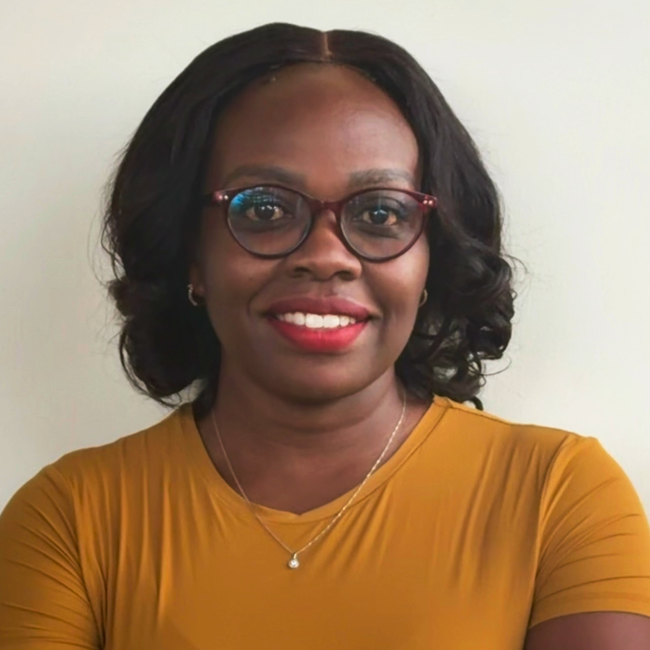
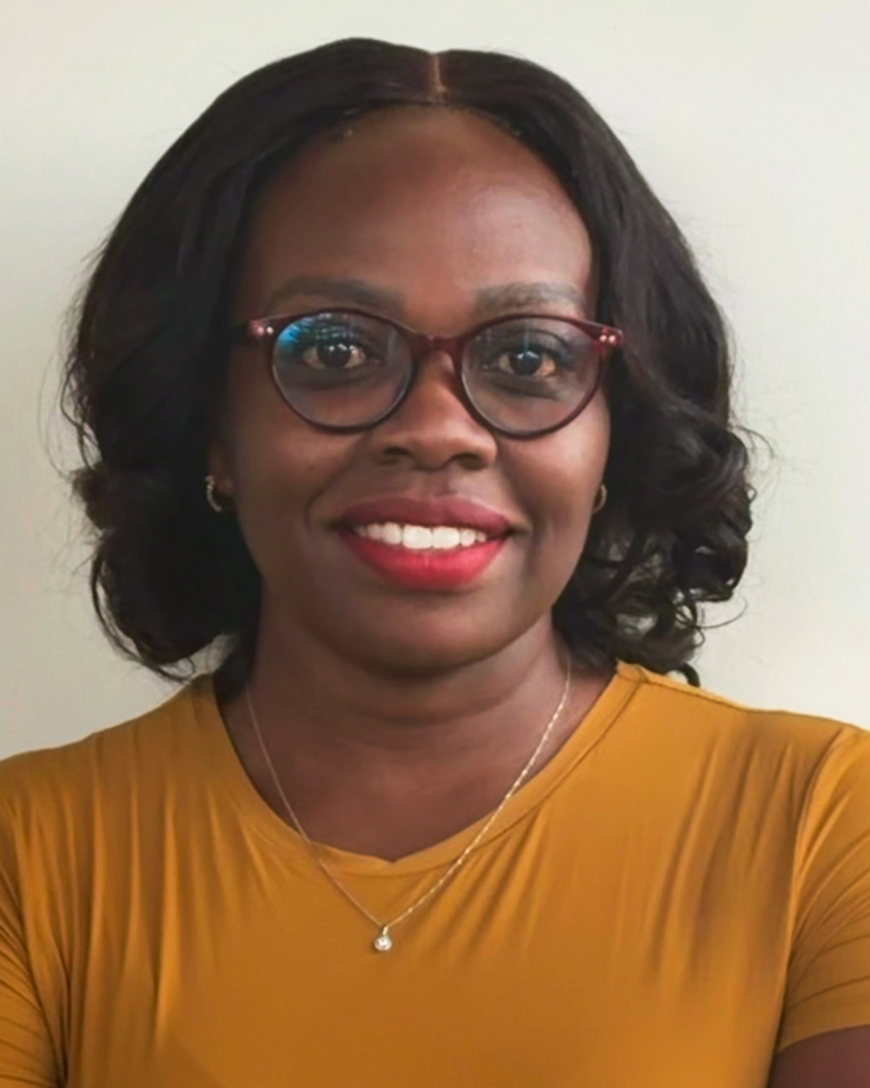
Pathways to Impact is a series of conversations with data for social impact leaders exploring their career journeys. Perry Hewitt, Chief Strategy Officer of data.org, spoke with Agnes Kiragga, the Head of the Data Science Program at the African Population and Health Research Center (APHRC) in Nairobi, Kenya.
How did you come to do social sector work?
I grew up in Uganda, and I’m currently working in Kenya, so work has been a journey! Looking back at how I got here, my bachelor’s degree was in biostatistics, at a time when there were very few options. You either went to the National Statistics Office or into the banking sector.
My first impulse was to work in a bank, but after several interviews that didn’t pan out, a colleague reached out to me about a short-term position at a clinical research organization. The organization was doing randomized controlled trials around different family planning tools for women living with HIV.
It was a match for my skills in data and analysis, and that’s how I started my career. I worked there for about two years, learning how to create data systems and working with data and data management tools. I taught myself to use many of those tools.
Since then, my career has progressed from one clinical organization to the next. For example, I worked at the Medical Research Council in Uganda, Makerere University up until I joined the African Population and Health Research Centre (APHRC) four years ago. In each of these roles, I have tried to use data to drive impact. That potential has always excited me: how do I get meaningful findings from my data sets, and provide this evidence to researchers to drive decision-making?
Along the way, I’ve also realized how critical a role a data practitioner can play. It requires a focus on collecting evidence that creates impact down to the last mile. When I left my work at the university, I had published about 150 publications on topics ranging from HIV to Kaposi’s sarcoma to cancer, all with a focus on how data informs the evidence.
Since then, my role has grown from a support capacity to now leading projects at APHRC. That shift requires understanding the fundamentals of what a successful data-led project looks like, creating the infrastructure, and creating the data systems. You have to consider your approach to training, and how you work effectively with researchers to propel the evidence to where it needs to go.
It’s taken a lot of learning to get here.
How have data and AI played a role in crafting solutions, and what’s changed with the advent of AI?
When you come from a very quantitative data background, where all you know is spreadsheets and crunching numbers, it was a big shift when LLMs came on board.
LLMs unlocked new paradigms of data. They let us consider how to look at these big data sets together, and that really changed my view of what’s possible with data.
Now you have the ability to add new data types: voice, images for all kinds of data sets, conventional and non-conventional inputs. AI has really moved the needle in unlocking our imagination for what’s possible with data. For many statisticians, biostatisticians, or people with similar backgrounds, the nuances around using other types of data have been a significant shift. We have had to adjust our methods to go beyond our traditional training, and to embrace how AI has shaped the way evidence is generated. That is the value of AI we are seeing in Africa and globally.
We are definitely in the AI era with a great deal still to learn. For example: How do you effectively deploy and advance an AI tool? How do you evaluate it? How do you recommend it? I think there are big challenges and opportunities ahead of us as we advance our data methods to adjust.
Now you have the ability to add new data types: voice, images for all kinds of data sets, conventional and non-conventional inputs. AI has really moved the needle in unlocking our imagination for what’s possible with data.
Agnes Kiragga, Ph.D. Head of Data Science Program and Research Scientist African Population and Health Research Centre (APHRC)
Which non-data and AI skills have helped in your career?
Curiosity! Naturally, I’m very inquisitive. I think when you’re a data person, you learn to be curious because you’re always crunching numbers, always trying to find out what evidence you’re generating, searching for the potential impact of the project. My approach is always to keep digging.
The second skill is adaptability. When I left Uganda, I never imagined I would work outside of my country, beyond my comfort zone. But there I was, landing in Kenya for the first time and charged with starting a data science program from scratch. A new environment, a new country, a new team. Remember, I’m very quantitative, coming from a narrower biostats background. It was a significant shift—building a new data science program from scratch, managing a large team, and unlearning much of what I thought I knew. That capacity to adapt has been equally important in navigating this fast-paced AI journey. I think you have to be really agile because the technology and how we use it are moving very fast.
Finally, in my high school, we had a motto: just never give up. There was an ethos of persistence that has helped in my career. If you apply for grants, you need to get used to receiving rejections. That persistence is common among researchers. It’s helpful to be quite resilient, and also keep moving—when things go south, the ability to get back up and push ahead makes all the difference.
Part of the Pathways to Impact series
What community of people or resources bolsters your work?
A strong family network has helped me a great deal. When you’re a woman in science, a support network is essential. In the African context, it can pose quite a challenge. I have four children and a spouse, and sometimes I’m asked: How do you balance family and work?
And I always respond that there’s no balance. It’s just that one thing will drop at a given point, and then you rebalance. That ability to have strong familial support as you’re doing your work has been instrumental for me.
The second is a supportive environment. Environments that are open, that encourage learning and accept failure have expedited growth in my career. This was particularly true when I moved to APHRC, which was built on the assumption that researchers will come in, grow their career, focus on an area of work, and seek related grants. The environment encourages people to try out different projects; to pursue success but to have the space and freedom to fail on some.
Mentors also matter. When I was doing my PhD, I enrolled in a Cornell University program providing mentors for female global scholars. The year-long program helped me get access to one or two mentors, who were essential in allowing me to bounce ideas off and think through my direction. That program has been vital in getting me to plan and reshape my career.
Finally, communities of practice play an important role. I’ve been involved with groups like Women in Data, and many data science communities are thriving: Deep Learning Indaba, Data Science Without Borders, DSI Africa. All these organizations are creating support structures that anyone in this space can really benefit from.
What have been some unexpected challenges?
It was a challenge early on to grow a family and a career at the same time. That was a tough period. I can remember traveling to do my postdoc at Johns Hopkins University with a six-month-old baby in tow. It was a time-bound offer, so I had to say goodbye to my other three children and my spouse. Yes, there are structures the institution can provide to support you, but as a woman, there’s a lot that you need to handle.
I had to balance running the lab, doing the work, and working from home—all while breastfeeding. So it’s a challenge, particularly when you step out of your community. When you’re back home, ideally, there’s more community support.
Another challenge I faced as a data analyst was getting spread too thin. You bring a particular set of skills, which are in demand across many different domains. Researchers came in with projects on TB or mental health or cancer or HIV—and as a data analyst, you have to keep up and calibrate your mind across all of them. There have been relatively few analysts in African institutions, so you are often spread very thin.
This issue will persist with the advent of AI. For example, at APHRC, we have over 300 researchers, and for every proposal now there are questions about the feasibility of LLMs or a chatbot or agentic AI. That demand is now piling up, and a data/AI person needs to manage competing demands and interests, and ensure that everyone has access to this new technology and can apply it meaningfully to their different projects.
An obstacle we continually face is the accessibility of data and interoperability of systems. For example, on cross-border projects, you’ll have extensive discussions and agreements to establish partnerships. But when it comes to actually getting access to data, it’s often a challenge. In the initial phase, when researchers are writing these very thoughtfully composed proposals on how to conduct this multi-country project, it all looks rosy. However, when you start discussing access to these data sets, you run into constraints for a time-bound project. You can end up spending one and a half years just trying to understand the nuances around sharing data.
I think it’s going to remain a challenge, particularly now when many African countries are increasingly aware of the need for data sovereignty. And moving forward, these challenges of data access are becoming more pronounced, and we need to see how to overcome them. Offer training, get access to a few datasets, understand what the governance issues are, move on, and deliver the project as you create systems that will lead to larger institutional development.
Finally, we’ve had to overcome the challenge of funding. Now, with all these global cuts, it’s becoming harder and harder to get access to funds, but we keep trying. As researchers, we need to keep at it.
What advice would you offer to someone who’s interested in doing this work?
It’s a fast-paced field. You have to be both adaptable and very ready to learn. I subscribe to many newsletters to stay on top of what’s happening in AI. It can be overwhelming, but it’s essential to learn from what’s available and to read widely in the field.
Don’t be discouraged. There are so many challenges, but if you focused solely on the challenges, you’d hardly move. Anybody moving into this field has to have the creativity and persistence to overcome the stumbling blocks. If there’s a problem with data-related infrastructure, insufficient skill sets, access to data, etc., reach out to your communities for support.
The other advice I would give, particularly now as we are going to see a lot of AI tools deployed in low- and middle-income countries, is that we need to be careful. What are we bringing on board? Is it ready? Is it adaptable to our settings? Can it be used in your local community? The next era will involve a lot of evaluation of AI. Anyone entering this field needs to be mindful of the imperative to adopt these technologies responsibly.
But for all the challenges, this work is rewarding. It’s heartening to see how data and AI fuel solutions that serve the community and that get to the last mile. For example, we had a project where we analyzed the burden of mental health issues like depression and anxiety across African populations. The evidence from that work directly informed the development of FarajaMH, an agentic AI tool built in-house at APHRC that helps frontline healthcare workers screen for symptoms of depression and anxiety, then refer patients for early diagnosis and care. We are now in the process of formally evaluating its performance—benchmarking the tool’s accuracy against clinical standards and validating it in the communities where it will actually be used. That journey from evidence to tool to evaluation is exactly what this work should look like. It’s extremely rewarding to see it come together.
Anybody moving into this field has to have the creativity and persistence to overcome the stumbling blocks. If there’s a problem with data-related infrastructure, insufficient skill sets [or] access to data, reach out to your communities for support.
Agnes Kiragga, Ph.D. Head of Data Science Program and Research Scientist African Population and Health Research Centre (APHRC)
What do you see emerging as the next big thing in data and AI for social impact?
I’m seeing so many calls coming out right now for small scale-up grants, AI tools for health, for the social sector, for agriculture. Given the pervasiveness of these tools and the speed at which they are being deployed, we’re going to see some of these built far from the context where they’re going to work. They’re going to be flown in here, not grounded in the local context. They’re going to be validated without local datasets.
I can offer an example. If you’re looking at a tool that is going to help with triaging patients in a hospital, you have to recognize that hospitals in the Global North are quite different from what you actually see in a rural hospital in a country like Guinea-Bissau. You have to adapt this tool to the settings. Does it even work with guidelines in the country? This is just one example, but there are many tools that are being deployed without local knowledge and local data.
To solve problems like this, the next big thing will be finding ways to help policymakers, governments, and the ministries of health, to empower them to say, ‘yes, this tool is good, but it’s not ready to work here.’ We need to move beyond blanket adoption of AI tools. Ensuring we are thoughtful about the application of locally-led AI solutions will be the next big thing for the continent.
What’s your don’t miss daily or weekly read?
My go-to is the Medical Futurist—Digital Health and AI, every week. It keeps me grounded on where the technology is actually going in health, not just the hype. For a broader AI perspective, I follow Exponential View by Azeem Azhar and the Rock Health newsletter—both give me a sharp signal-to-noise ratio on what matters. Writer/Builder by Hilary Gridley is newer to my list but consistently good on where AI tools are heading practically.
On podcasts, How I AI with Claire Vo and Leveraging AI with Isar Meitis are the ones I return to most. I listen while traveling, which is often.
For the continent specifically, I still read iAfrica—it is one of the few sources tracking African policy and data governance developments in real time. And for peer-reviewed work, Lancet Digital Health is the journal I check most consistently.
About the Author
Chief Strategy Officer Perry Hewitt joined data.org in 2020 with deep experience in both the for-profit and nonprofit sectors. She oversees the global data.org brand and how it connects to partners and funders around the world.
Read moreSeries
Pathways to Impact
This data.org series interviews leaders in Data Science for Social Impact with a lens of how they got there, as well as the skills and experiences that have fueled their career progression.