Understanding the Challenge
Capable people and organizations do not automatically create a functioning ecosystem. Across APAC, expertise, institutions, resources, and initiatives are distributed across countries and sectors. Universities develop talent and research; governments build public infrastructure and workforce programs; companies bring technical expertise and professional networks; MSMEs and social-impact organizations understand markets and communities; and funders and regional institutions support related priorities. Yet these capabilities can remain disconnected.
The same is true of knowledge. Insights generated through one program or partnership may remain with those directly involved, while organizations confronting similar challenges may struggle to access relevant experience, resources, or opportunities.
The ecosystem challenge is therefore not simply to create more initiatives, but to connect existing capabilities across organizational, sectoral, and geographic boundaries.
Our Approach
The CAN APAC Hub approaches ecosystem building as a connective role. Rather than attempting to deliver every capability directly, it works through institutions and networks already embedded across the region and looks for ways their capabilities can reinforce one another. Three principles guide this work:
- Build through trusted partnerships and existing infrastructure: Governments, universities, industry networks, community organizations, multilaterals, and social-impact organizations bring different forms of expertise, credibility, reach, and institutional capacity.
- Connect complementary actors and close loops between existing relationships: Some partners already know or work with one another; others enter through different parts of the network. Shared initiatives create opportunities to deepen bilateral relationships, connect them with new sectors, and combine capabilities around common challenges.
- Make knowledge and opportunities circulate: Convenings and CANversations allow expertise to travel across programs and geographies, while digital products turn learning into resources that others can discover, reuse, and adapt. APAC Hub can similarly draw on experience from elsewhere in CAN while contributing regional approaches back into the global network.
The following examples show how this connective role takes shape through public institutions, higher education, industry and implementation partners, convenings, and reusable resources.
In Practice
Government engagement
Government engagement provides a pathway for connecting CAN’s capacity-building resources and networks with public priorities and infrastructure. The Hub begins with alignment rather than a predetermined program: depending on context, this can mean adapting learning resources, contributing expertise to policy dialogue, connecting public counterparts with other ecosystem actors, or developing longer-term institutional partnerships.
APAC Government Engagement Model
01National priorities
Start from what the public sector is already working towards.
02Aligned resources
Identify the capacity-building resources and expertise that fit those aims.
03Initial engagements
Build the relationship through small, concrete activities.
04Adapt and localize
Translate and reshape materials so they work in the local context.
05Existing infrastructure
Deliver through institutions, platforms and programmes already in place.
06Wider ecosystem
Connect public counterparts to other actors in the field.
Alignment before programme
There is no predetermined offer. What follows the first conversation depends on context: adapting learning resources, contributing expertise to a policy dialogue, introducing counterparts to other ecosystem actors, or building a longer-term institutional partnership. Adoption arrives by several routes — direct government partnership, multilateral dialogue, partner-mediated delivery, and participation in wider policy forums.
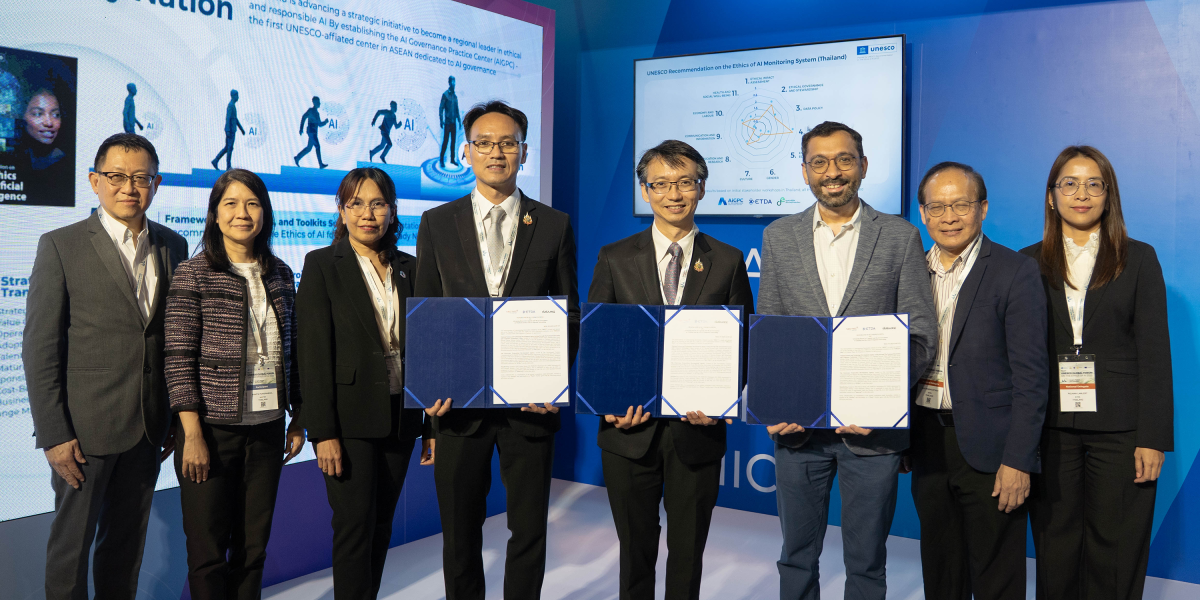
In 2025, data.org signed an MoU with Thailand’s Electronic Transactions Development Agency (ETDA) and National Electronics and Computer Technology Center (NECTEC) to support data and AI capacity building aligned with Thailand’s national AI priorities. A central component has been making CAN learning resources available in English, with NECTEC translating and helping adapt content for local use.
The relationship has also extended beyond the original partnership. A senior NECTEC expert mentored participants in the 2025 Tech Policy Hackathon in Bangkok and subsequently contributed to the 2026 Financial Health CANversations series, bringing expertise from Thailand’s AI ecosystem into wider regional learning initiatives.
Multiple Routes to Public-Sector Ecosystems
Formal partnership, as illustrated above, is only one route:
- Through UN ESCAP’s Community of Practice on AI (COPAI), data.org contributed to a dialogue on developing Cambodia’s AI workforce alongside government, academia, industry, and other stakeholders.
- In Odisha, NUS-AIDF’s partnership with the state government and GFTN created a route for CAN learning resources to become part of a larger government-supported talent initiative.
- Through data.org’s partnership with the Government of India’s Capacity Building Commission, an abridged version of the NUS-AIDF FinTech Literacy Program is being made available through a learning ecosystem serving more than 17 million civil servants.
- Through the UN Women’s EmPower program, data.org contributed sessions on topics including AI in governance and low-resource language digitization, reaching more than 300 women and youth across APAC, many from non-technical backgrounds.
The Hub has also connected capacity-building activity with wider policy moments. Ahead of the APRU Global Health Conference, for example, data.org convened a workshop on ethical AI in health systems that, through regional partnerships, was positioned as a pre-event to the AI Impact Summit.
Together, these examples illustrate several routes into public-sector ecosystems: direct partnership, multilateral dialogue, partner-mediated delivery, and alignment with wider policy platforms.
Higher education partnerships
Higher education institutions have been foundational to CAN APAC. They bring academic and technical expertise, institutional credibility, established networks, and durable structures through which capacity-building models can be developed and extended.
APAC Higher Education Engagement Model
How higher education contributes to the ecosystem
01Academic expertise
Faculty knowledge and institutional credibility enter the partnership.
02Curriculum design
That expertise is shaped into courses, modules and learning pathways.
03Student engagement
Learners take part through competitions, hackathons and coursework.
04Applied projects
Student teams take analytical work directly into impact organizations.
05Networks and convening
Institutional networks extend proven models to new partners and themes.
Each initiative draws on a different combination of these contributions.
Different partners contribute these capabilities in different ways:
- NUS-AIDF has brought academic expertise to the FinTech Literacy Program and its wider institutional pathway in Odisha.
- APRU provides a regional network through which hackathons, the Global Health Virtual Case Competition, SIDSA, and other initiatives can engage universities across the region and make opportunities accessible to its community of more than two million students.
- Through SIDSA, teams from the University of the Philippines, Chinese University of Hong Kong, and Asian Institute of Management (AIM) brought analytical capability directly into MSMEs & social-impact organizations working with communities, smallholders, and entrepreneurs.
- AIM is also hosting the in-person final stage of the 2026 Financial Health Frontiers Hackathon with Cognizant.
The model is extending into adjacent areas through the APRU Multi-Hazards Program, where APRU, Tohoku University, RIKA Institute, and Keio University are co-developing an introductory course on AI and Big Data for Disaster Risk Reduction with an MSME lens.
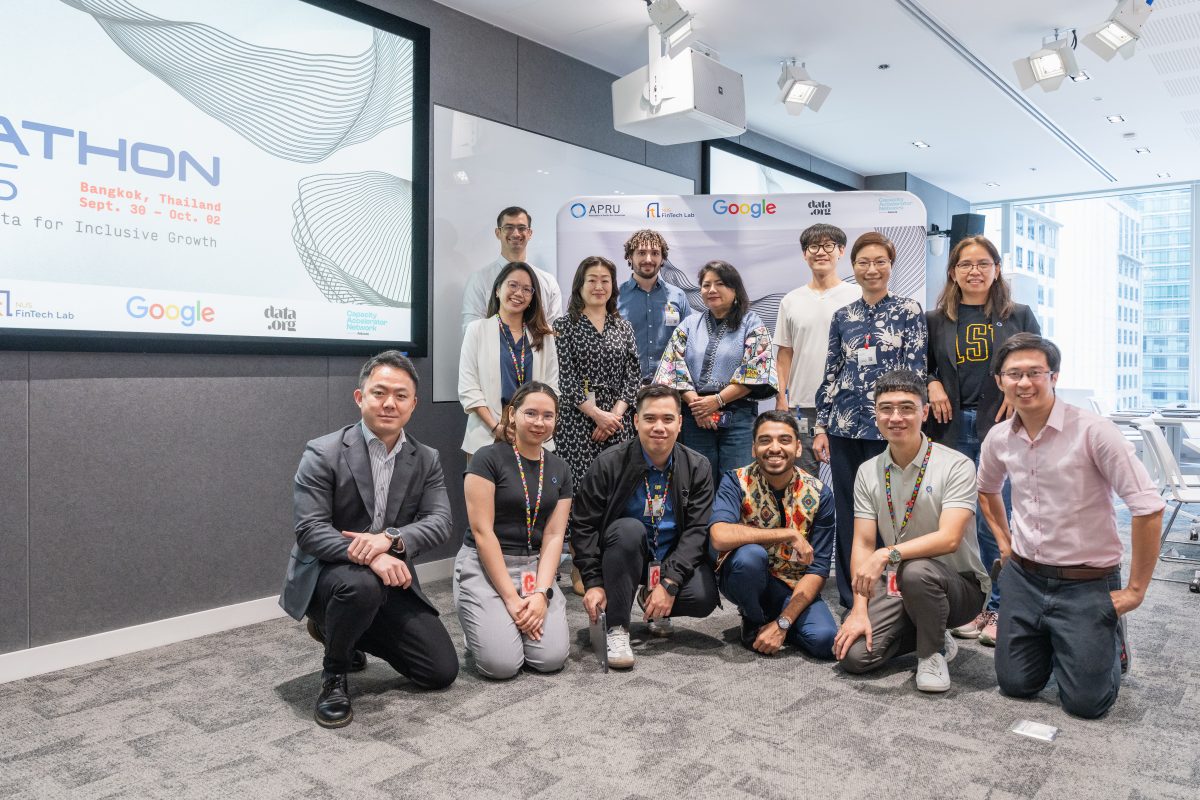
Across these initiatives, universities operate as knowledge partners, talent networks, technical collaborators, and regional or local anchors—not simply as training providers.
Industry and implementation partnerships
Industry and implementation partners connect capacity building with the environments in which data and AI are ultimately applied.
APAC Industry Partnership Model
How industry and implementation partners contributes to the ecosystem
01Resources and infrastructure
Funding, tools and venues make programmes possible.
02Practitioner expertise
Industry professionals shape programme vision and surface gaps to be addressed.
03Real-world challenges
Partners provide, and sometimes own, the problems that participants across programmes are asked to solve.
04Mentorship and exposure
Staff coach participants across programmes and open a view of professional practice.
05Networks and platforms
Industry networks extend the reach of solutions developed across programmes.
06Implementation contexts
Outputs created by programme participants are tested against the systems they must fit.
The form of partnership follows the need — most initiatives draw on a combination of these contributions.
The APAC hackathons illustrate several roles industry can play. Google funded the 2025 Tech Policy Hackathon and hosted finalists in Bangkok. In 2026, Cognizant’s involvement in Financial Health Frontiers spanned funding, program support, practitioner engagement, capacity building, and convening. Nasscom has added connections to its wider innovation ecosystem, while financial institutions, MSMEs, cooperatives, and social-impact organizations have brought real financial-health challenges into the learning experience.
Implementation partners play a different role. Through SIDSA, ARK Solves, RSPO, and iDE owned the organizational problems around which university teams worked, with staff defining needs, explaining workflows, testing approaches, and determining whether outputs could work in practice.
Community institutions provide another route to impact. Jamiyah Singapore, for example, is using data.org’s digital learning resources to strengthen foundational data and AI capability among staff and beneficiaries, creating opportunities for learning to travel through programs supporting women, families, and entrepreneurs.
The form of partnership therefore follows the need: expertise, infrastructure, challenge ownership, implementation context, networks, reach—or a combination of these.
CANversations
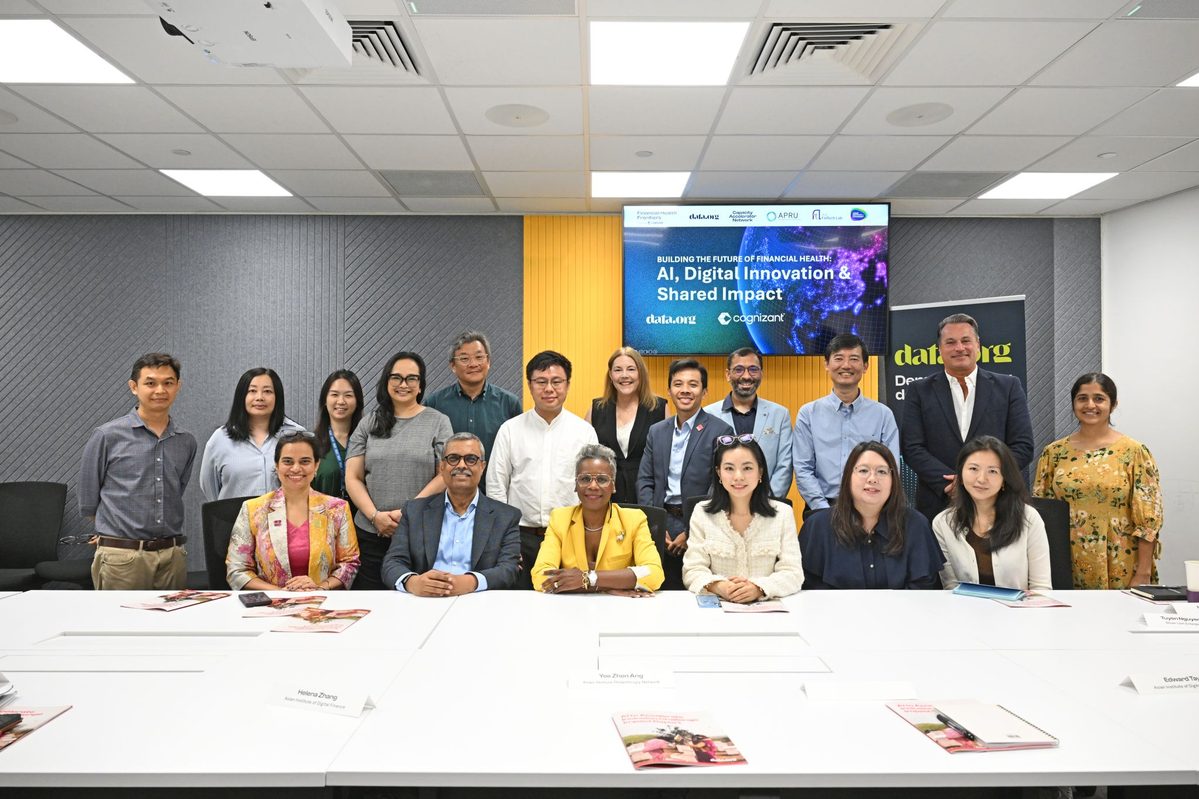
CANversations provide a lighter-touch layer of community engagement, infrastructure, enabling partners, practitioners, learners, and fellows to exchange knowledge and extend expertise generated through individual partnerships to wider audiences.
The CANVersation Model
01Relevant theme
Start from a question the community is already working on.
02Network expertise
Draw the voices and evidence for that theme from across the network.
03Convening
Bring partners, practitioners and learners into one session.
04Exchange
Share experience, methods and resources in the open.
05Onward connection
Route participants to further learning and collaboration.
On the name
‘CANversation’ is envisioned as a conversation space for the community of decision makers, practitioners, academicians and others emerging from data.org’s flagship program – Capacity Accelerator Network (CAN).
Two roles, one format
The cycle repeats as standing community infrastructure and wraps around longer programmes as a lighter-touch learning layer. Each round gives regional partners a route for their experience to reach the wider global community.
An APAC CANversation in 2025 on Financial Health, Data, and AI for Social Impact brought together NUS-AIDF and Jamiyah Singapore. Professor Edward Tay introduced financial-health fundamentals and the role of fintech in reaching underserved communities, while Roza Ahmad grounded the conversation in Jamiyah’s work with women from low-income families. Participants could then continue learning through the FinTech Literacy Program.
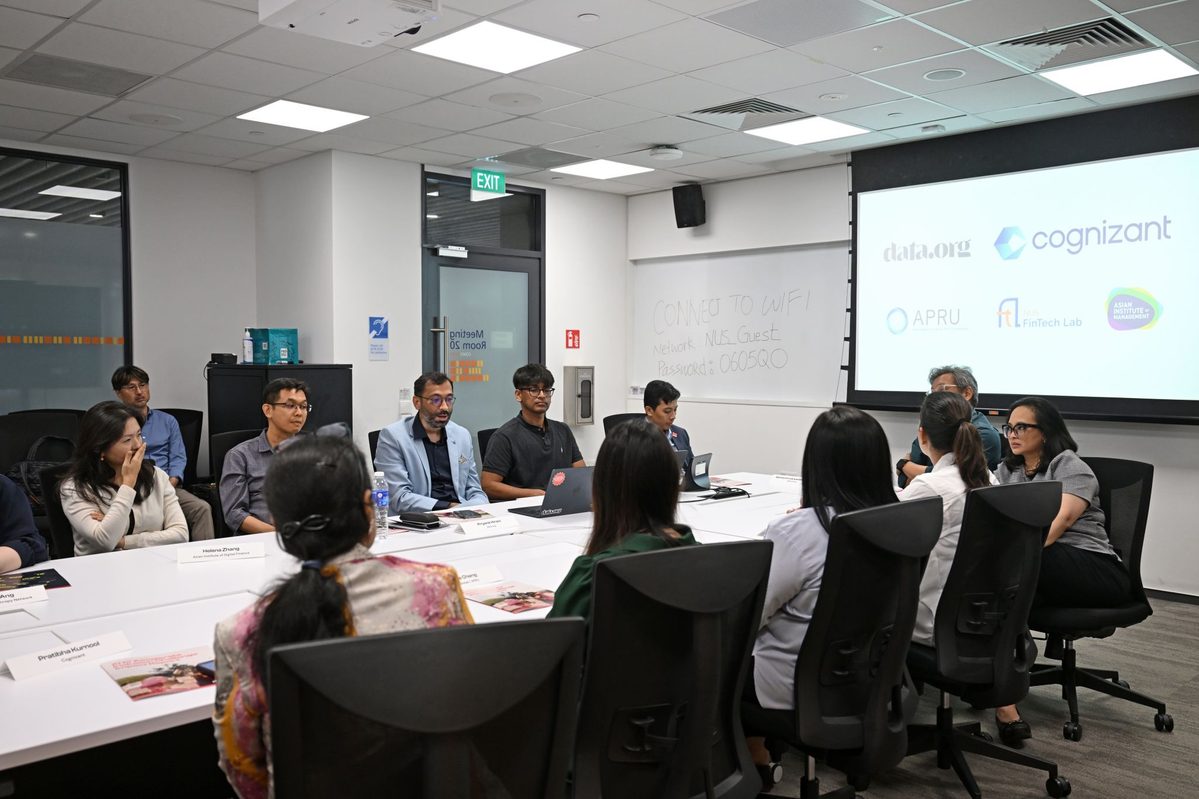
In 2026, the Hub adapted the format into Financial Health CANversations, a four-part learning series alongside Financial Health Frontiers Hackathon. Sessions brought together expertise from data.org, Nasscom, Cognizant, government, and industry and were opened beyond hackathon teams to the wider ecosystem, with a hybrid format combining virtual participation with gatherings at Cognizant offices.
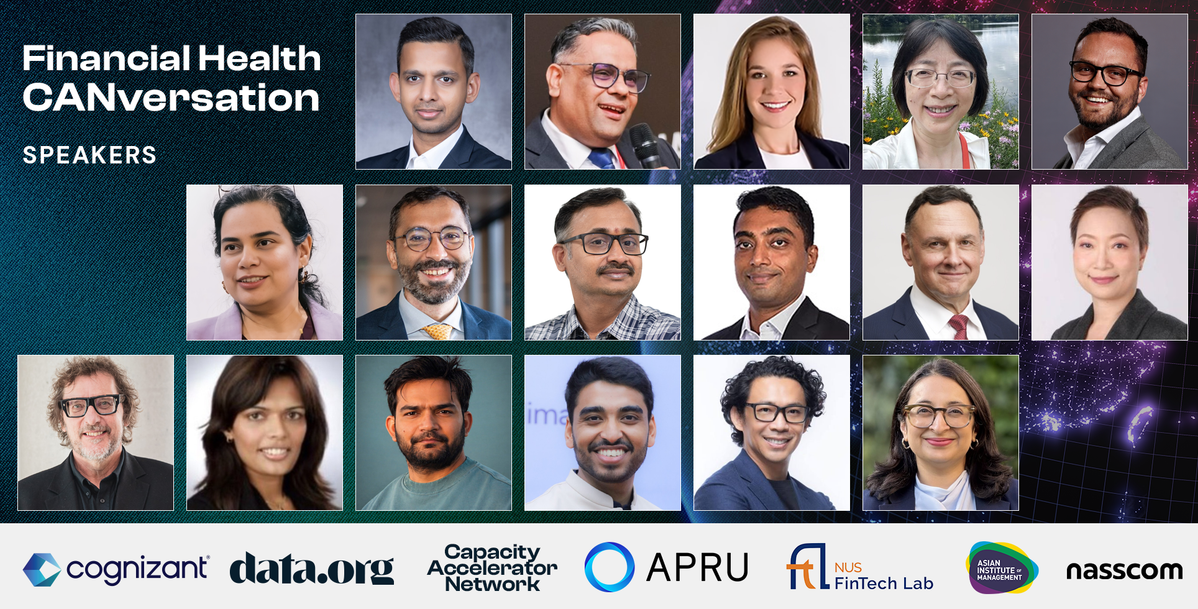
CANversations can therefore function both as recurring community infrastructure and as a learning layer around other programs.
Regional convenings
Regional convenings create opportunities to connect knowledge and relationships developed through CAN with wider communities across APAC. Depending on the objective, the Hub works through established platforms or develops more focused gatherings with partners.
APAC Convening Model
Regional convenings as connective infrastructure
01Programmes, tools and learning
Knowledge and relationships developed through the programme form the starting material for a convening.
02Regional platforms and focused convenings
Depending on the objective, the Hub works through established platforms or develops more focused gatherings with partners.
03Resources and opportunities flow back into the ecosystem, which in turn shapes the Hub
Learning, resources, and insights from the Hub are disseminated in various formats. Lessons from elsewhere in the ecosystem inform the Hub design and activities.
04New relationships and allies
Participants come from government, industry, academia, civil society, and international organizations, and leave connected to one another.
Convenings provide points of connection between programme experience and wider regional conversations, without requiring the Hub to build every audience independently.
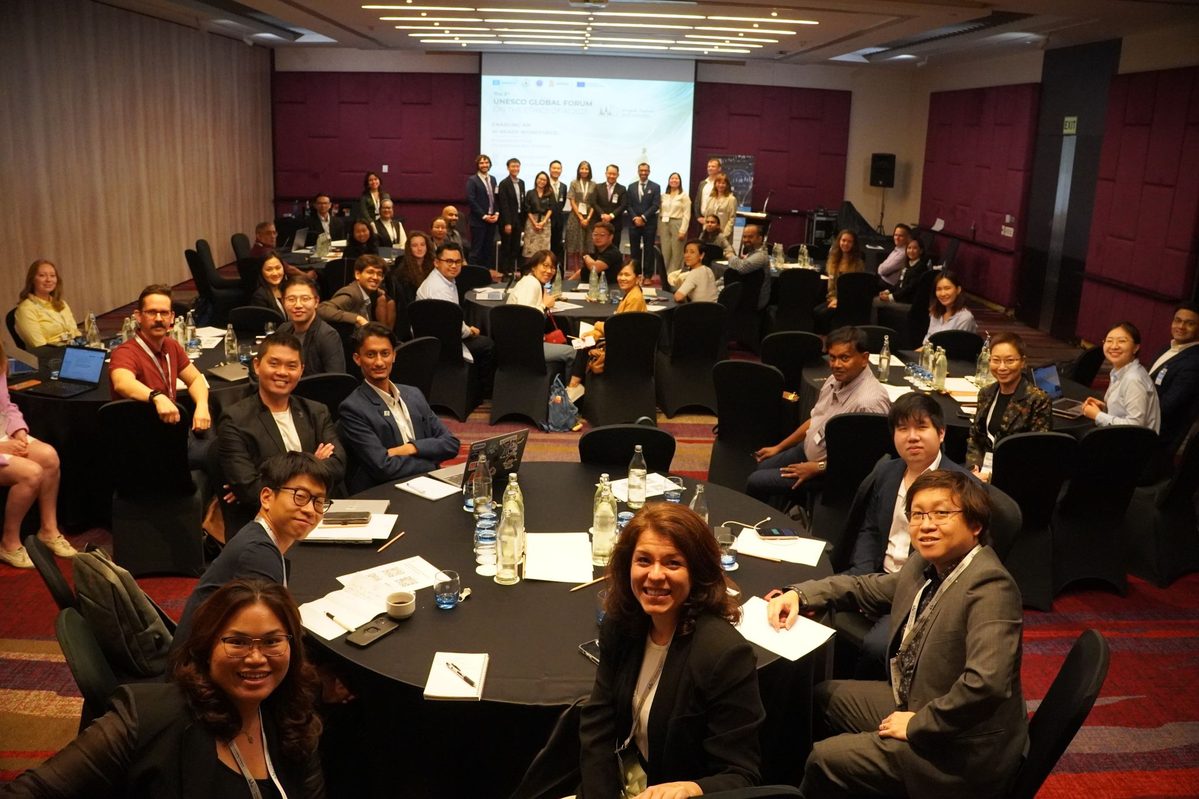
At the 3rd UNESCO Global Forum on the Ethics of AI in Bangkok in 2025, data.org partnered with UN ESCAP, APRU, and AVPN on an official side event, Enabling an AI-ready Workforce: Exchanging Policy Perspectives and Solutions.
The invite-only workshop brought together more than 60 participants from government, industry, academia, civil society, and international organizations. A multi-stakeholder panel was followed by facilitated roundtables on priority needs and possible solutions for AI and data literacy. UN ESCAP subsequently published a synthesis and recommendations, allowing learning from the discussion to travel beyond those in the room.
Leveraging Established Regional Platform
The Hub also contributes to forums where relevant communities are already gathered. These have included the ASEAN Inclusive Growth Summit, Philanthropy Asia Summit, Singapore FinTech Festival, APRU Global Health Conference, APEC University Leaders Forum, GFTN Knowledge Circle, as well as AVPN conferences and communities of practice.
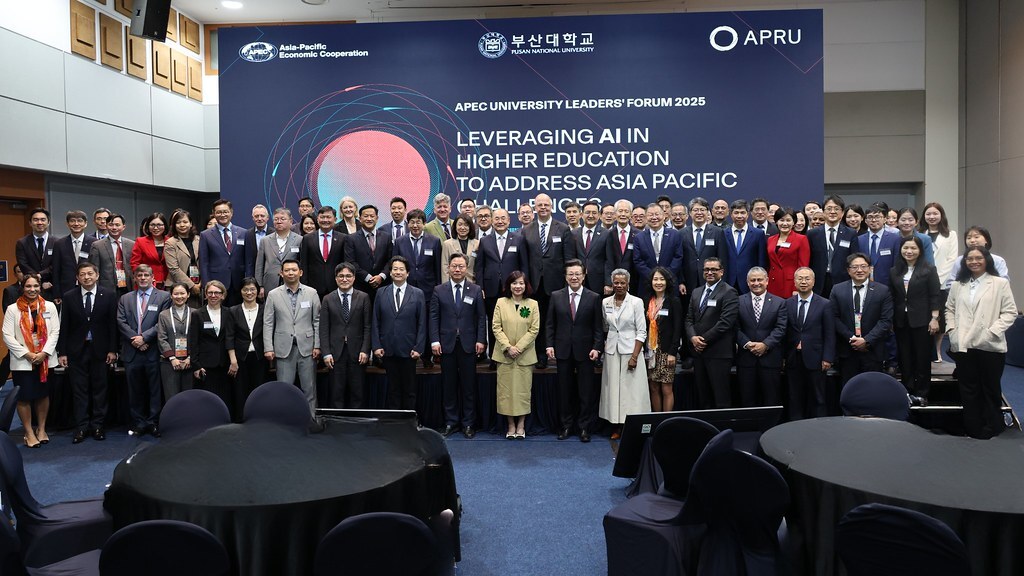
Across these engagements, convenings provide points of connection between CAN experience and wider regional conversations without requiring the Hub to build every audience independently.
Digital products
Digital products provide a reusable layer around the Hub’s programs and relationships, capturing knowledge in forms that practitioners and institutions can discover, use, and adapt beyond the original activity.
Different products serve different needs:
| Need | Product |
| Understand an approach | Playbook / knowledge product |
| Learn from implementation | Case study / impact story |
| Build capability | Course / learning resource |
| Assess organizational readiness | DMA |
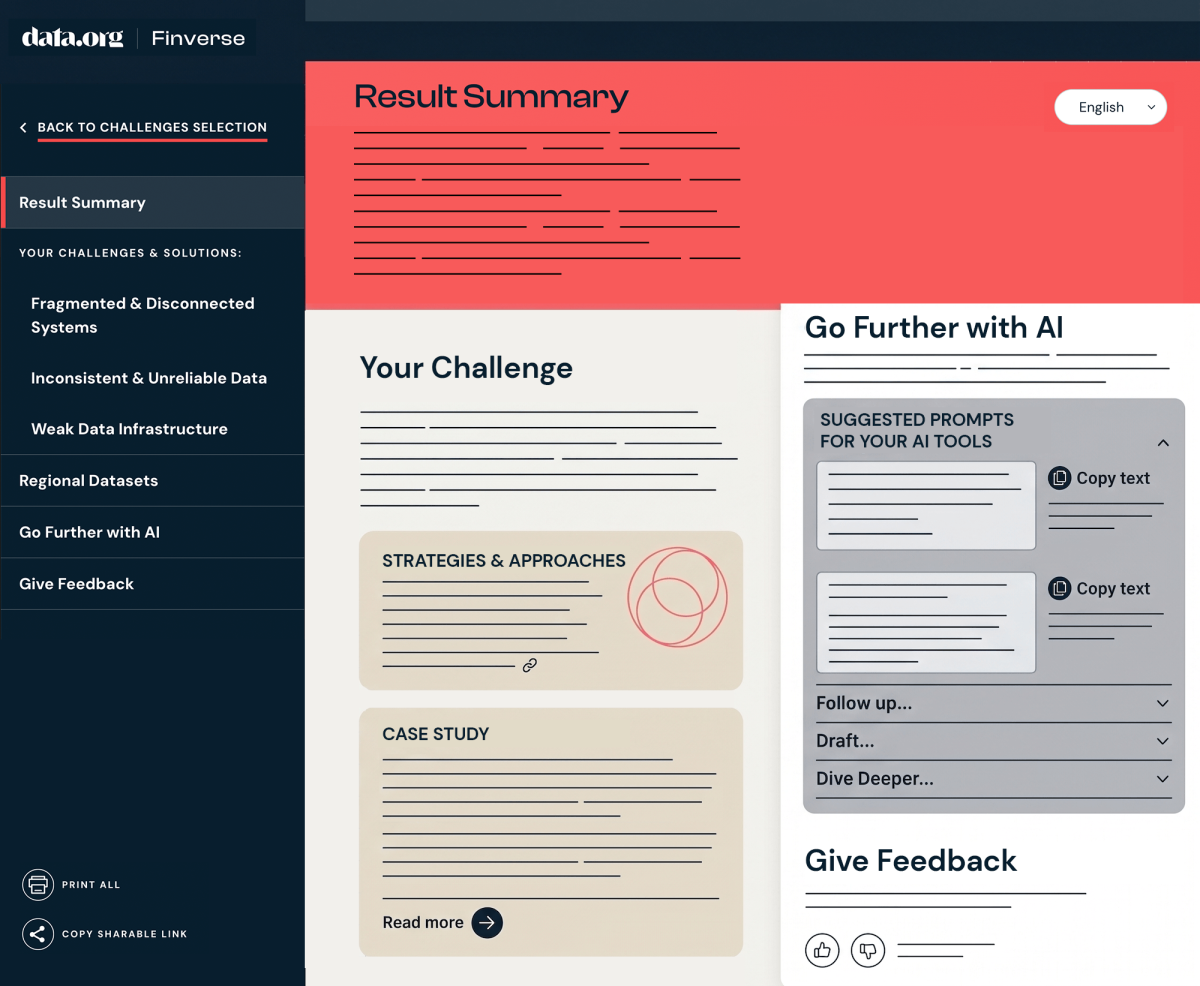
| Navigate financial-health data challenges | Finverse |
Their value lies in portability. Courses can move from open learning into institutional programs or community settings. DMA and Finverse can be used independently or alongside facilitated support. Implementation experience can become case studies and impact stories; learning from a convening can become a synthesis accessible beyond those who attended.
This playbook follows the same logic: experience across CAN APAC is being documented so that program models, partnership approaches, and implementation examples can be interrogated and adapted by others.
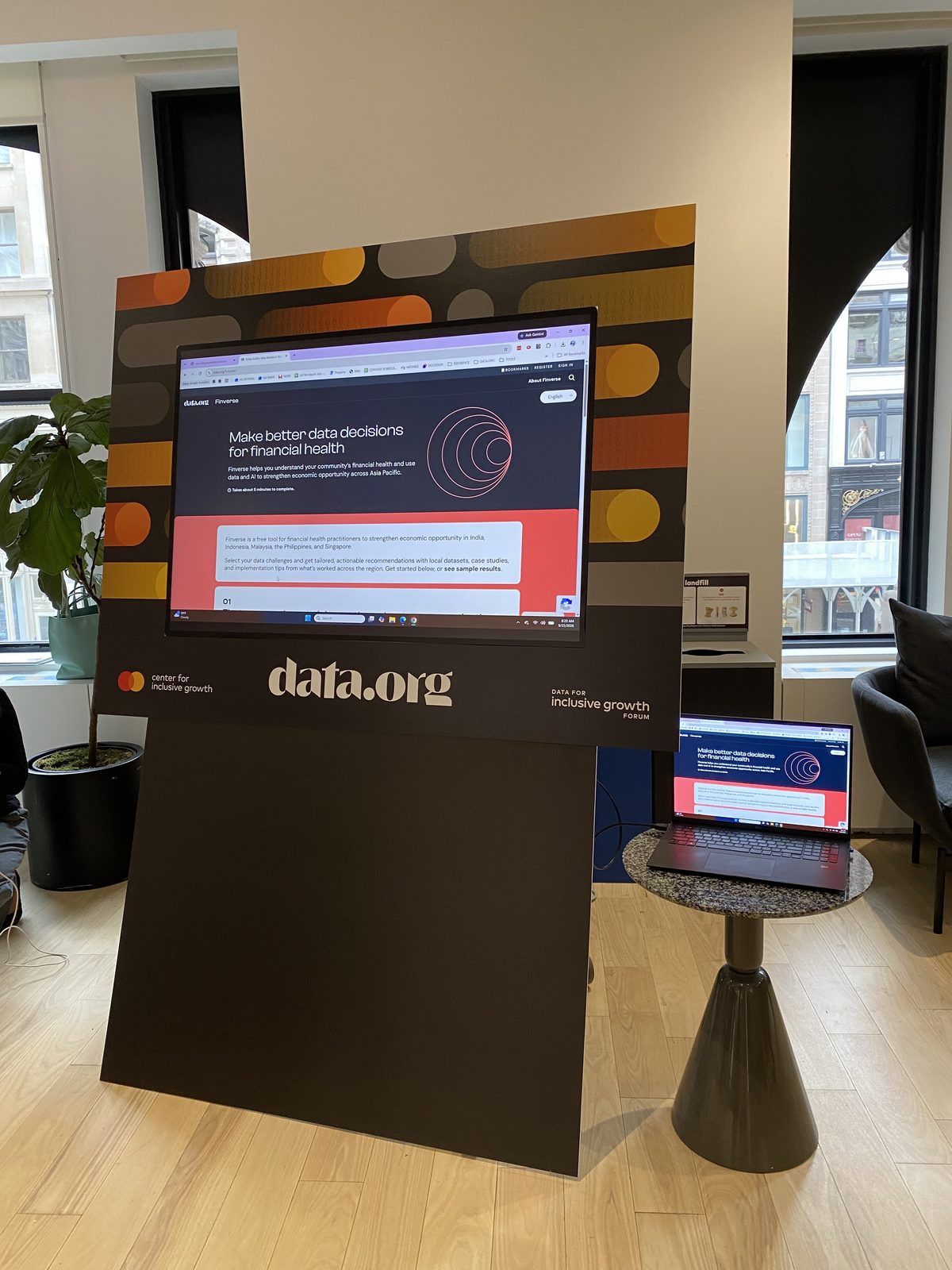
Digital products therefore do not constitute a separate program stream; they help knowledge generated through programs and relationships remain reusable across contexts.
From Partnership to Network: National Electronics and Computer Technology Center (NECTEC), Thailand
Through the experience of Dr. Kamolpun Punpuing

Starting with institutional alignment
data.org’s relationship with NECTEC and ETDA began around a shared interest in strengthening data and AI capacity in Thailand. Through an MoU, the organizations are making CAN learning resources available in Thai and exploring capacity-building opportunities aligned with national priorities.
Dr. Kamolpun Punpuing, a senior leader at NECTEC and a key champion of the partnership, has subsequently contributed across several parts of the APAC ecosystem.
From partner to ecosystem contributor
In 2025, Dr. Kamolpun joined the APRU Tech Policy Hackathon in Bangkok as a mentor. Importantly, NECTEC and APRU were not new to one another: they had previously collaborated bilaterally on AI. The Hub created an opportunity to build on that relationship in a wider cross-sector setting, connecting government expertise with students, universities, industry partners, and social-impact perspectives.
In 2026, Dr. Kamolpun returned through the Financial Health CANversations series. In a session on Designing Solutions for Adoption and Scale, she joined Kasima Tharnpipitchai, Chief AI Officer at Gulf Development, in a conversation moderated by Pratibha Kurnool, Cognizant’s Head of Social Impact for Asia Pacific and Japan. Together, they explored organizational change, inclusion, user needs, infrastructure, and evidence of value in moving technology from experimentation toward adoption.
This illustrates an important part of the Hub’s connective role. NECTEC’s engagement has moved between a national capacity partnership, student learning, and cross-sector regional dialogue—while allowing expertise from Thailand’s AI ecosystem to travel further.
In her words
“Responsible data and AI adoption is a shared, cross-sectoral imperative that transcends national borders. Representing the government policy perspective allowed me to share insights from public administration, but equally valuable was the opportunity to learn from the fresh perspectives of students, practitioners, and experts.”
Explore more