Curated conversations with data and AI for social impact leaders on their career journeys
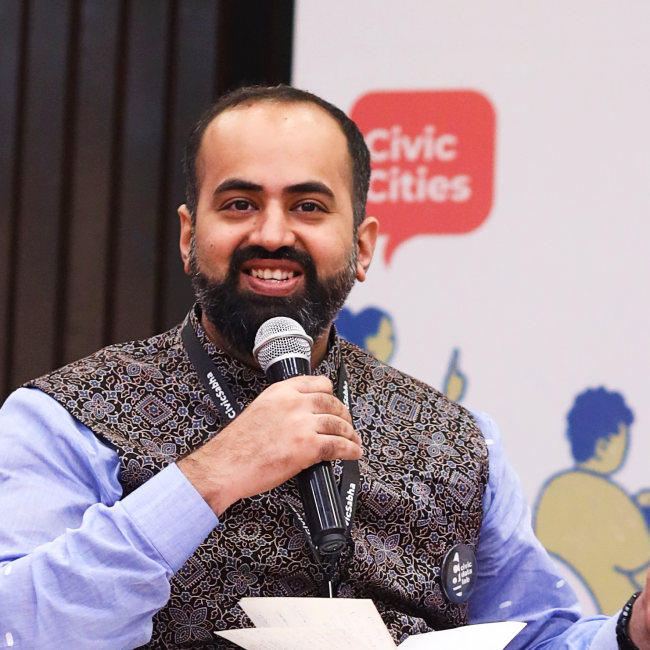
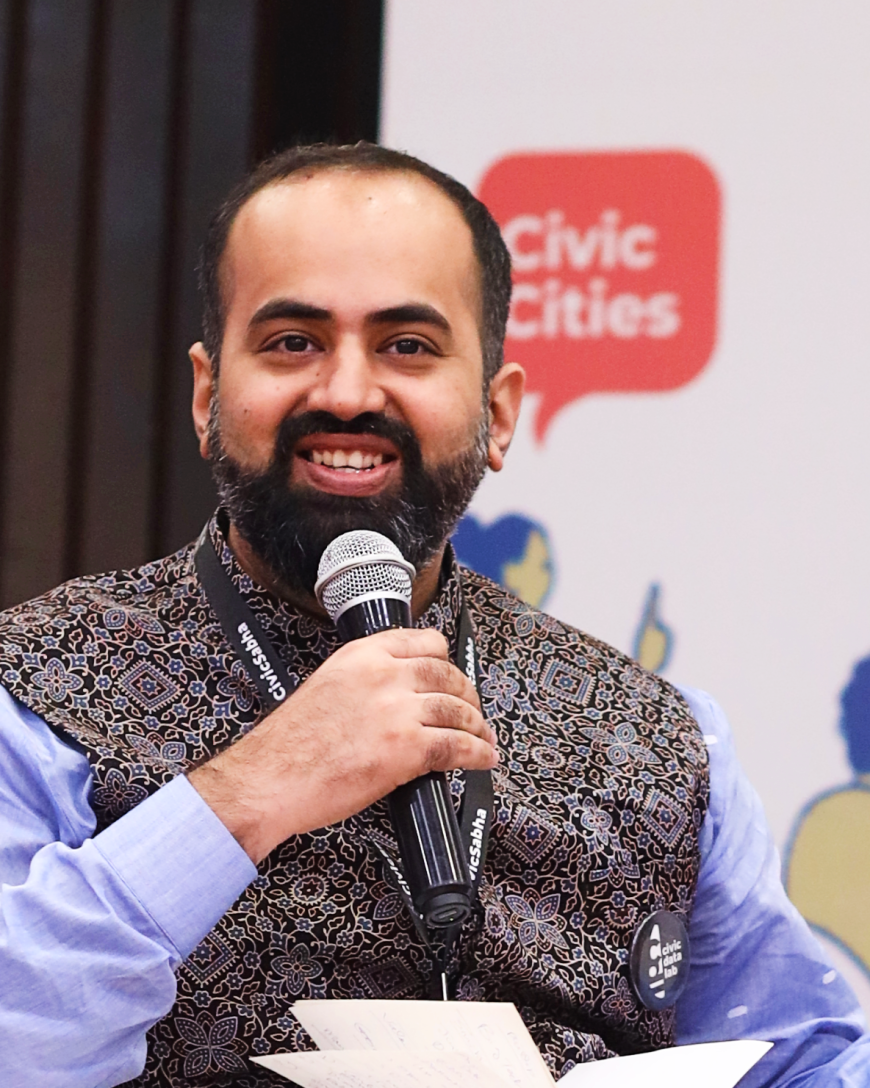
Pathways to Impact is a series of conversations with data for social impact leaders exploring their career journeys. Perry Hewitt, Chief Strategy Officer of data.org, spoke with Gaurav Godhwani, the co-founder and executive director of CivicDataLab — a research lab harnessing data & responsible AI innovations to enable millions of changemakers and enhance civic engagements in India & other countries especially in the Asia Pacific.
What role or sector did you move from? How did you get where you are today?
It’s a very personal story. I grew up in Madhya Pradesh, which literally translates to the central state of India. I spent my early days in a small town known as Ratlam, and then moved to Indore.
Growing up, my parents used to follow a family tradition: when we lost someone, we marked the death anniversary by volunteering in the community. Through visits to leprosy homes, working with persons with disabilities, and engaging with marginalized groups, I learned early that service is not only about helping but it’s about staying connected to others with empathy and purpose.
Volunteering became a natural part of my life. Since then, throughout my education and my first job, I volunteered for different causes whenever I had the time.
Alongside this, I developed a love for technology. As a child, I spent hours experimenting on our family computer, writing simple programs, automating tasks, and using slide decks to tell stories. This was something that I enjoyed, and it led me to pursue computer science engineering, and my first job as a data engineer at a small startup. My early career taught me skills that we now call data science, like data mining, quantitative analysis of different kinds of data sets, working with large data sets, data APIs, and data engineering.
At that first startup, we applied data science to everything from tickets being sold for football matches to tracking shipments and vessels moving all over the world. Analyzing and deriving insights from data sets like these gave me a sense of the potential of these technologies for a broad set of use cases. Next, a stint at a small travel company (now a major player!) helped me understand how data could democratise travel, empowering citizens to book trips independently rather than rely solely on travel agents.
I was grateful for these learning experiences, but somewhere inside, something felt lacking. Despite the intellectual rigor of the work, I wanted my work to mean something to the community I came from, to the people whose realities I saw growing up.
That desire for a pivot brought me to the work of DataKind, then operating as Data Without Borders. I started volunteering with DataKind Global Communities, contributing GIS and map files for Africa and a couple of other regions.
DataKind offered an opportunity to open chapters beyond the two they had in New York and London. My friend Somya Gupta and I applied and were selected in 2014 to start a chapter in India.
That period of my career was formative. I was just 24, and they flew me to New York to learn how UN agencies work, how data ecosystems work at scale, and how we can start thinking about data for public good.
Returning home, we built our chapter from scratch—practically working 7 days a week: 5 days at our regular jobs, 2 days at our volunteering job. That’s how my journey into the sphere of data for social impact truly started.
We are not here to challenge the landscape. We are here to enable the landscape to do what it is doing more effectively and efficiently with the benefit of data and technology.
Gaurav Godhwani Co-founder and Executive Director CivicDataLab
How did you come to found CivicDataLab and bring those week and weekend worlds together?
Taking a career break in Indian households is often frowned upon; it’s seen as stepping off the path rather than pausing to find direction. After a few years of working, I felt the need to pause and reflect on what actually mattered. It took some convincing, but my parents and close friends supported my decision to take a break and figure out where I could create a more meaningful impact.
I’m a mountain lover, so I went to the Himalayas and spent some time volunteering there. One of the non-profits we were volunteering with let us know they were putting in applications to large philanthropies, and that the grants were contingent on having a strong technical partner—that became my cue.
That was the impetus I needed to begin as an independent consultant. In this role, I led a small team that built Open Budgets India, a large data platform that brings in all the public finance data, trying to track government budgets and spending across India, at the national level, at the subnational level, at the local, municipality, and city level. It was, at the time, a unique digital public good helping governments, researchers, and citizens track how public money was being spent, and whether those priorities matched people’s needs.
Watching how that platform empowered others was a turning point. I realized that this was the kind of work I wanted to dedicate myself to help bring long-term change in our society.
It gave me the confidence to start a full-fledged organization. I reconnected with Deepthi Chand, a fellow DataKind volunteer, who became the technical co-founder while I led the business side, focused on ways to bring the community together to create usable, accessible data for sustainable and scalable public good interventions.
Part of the Pathways to Impact series
Where does CivicDataLab focus its data and AI for impact work?
CivicDataLab started with a focus on the public finance and education sectors. Gradually, it expanded to law and justice and urban development. But one intersection runs through all of it—climate action.
One of the government agencies in the northeastern region of Assam reached out to us, knowing our work in public finance. They asked us to look at the data on public spending for severe flooding and soil erosion, which of course has implications for migration, health crises, economic resilience, and more. This project made the explicit connection between public finance and climate data, which gave us confidence to further explore that intersection.
Now, climate adaptation and disaster risk reduction have become a major part of our work. Beyond India, our program serves Indonesia, the Philippines, and Thailand, providing a live application for citizens to understand local risk and report on neighborhood-level disasters, and connect through social media.
This program uses AI in two ways. First, it creates a comprehensive risk score, analyzing all the data sets and giving. This score helps district and sub-district officials, who are very small units (imagine a government office with one or two shared laptops), to monitor disaster risks in their geography, and to understand the plethora of data available to them for project prioritization. This comprehensive risk score is generated through an AI algorithm, and Saurabh Levin, data.org CAN fellow, helped us co-develop it.
Secondly, we use AI to take this information to citizens. We simplify access using LLMs (large language models) through the help of a chatbot, which lets citizens know the risk score of their district in their local languages. It also helps citizens to understand the government’s projects to reduce current risk. They can see the issues and remediations in their local district compared to other districts.
It also lets citizens record data: take pictures and assign tags to provide information back to the government agencies on how a community is impacted by a disaster. AI helped us create an effective two-way bridge between the risk score and the citizen reporting.
Were there any unexpected blockers to your career entry or progression?
Initially, I was seen primarily as a ‘data person’, often without domain expertise. There were instances where I often didn’t know the subject matter domain, and that’s when I learned that maintaining humility and perspective is important. I realized that AI can help you with the data and the insights, but you (the human) are still in charge. I constantly reaffirm the point that we must always ensure that there is a human in the loop.
In the beginning, people used to perceive that data people would take away their jobs. I knew that wasn’t true and had to find a way to address those misconceptions. Over time, we have worked to build essential trust and confidence by showing up to co-create a solution rather than offering solutions. This was vital on-the-job learning for me.
Coming from a startup, I was used to chasing targets and working in a very fast-paced environment. I had to learn that social impact work comes with its own constraints, and is in many ways a much more dynamic environment in a context of changing realities. I had to learn how to have a larger perspective in mind when considering rolling out solutions or interventions.
For example, I had to learn more about how governments and bureaucracies work and about the role of civil societies, academia, and other research organizations.
Bottom line: We are not here to challenge the landscape. We are here to enable the landscape to do what it is doing more effectively and efficiently with the benefit of data and technology.
Are there other specific skills beyond your data skills that really enabled your contribution? What helped you to be successful?
Two skills shaped my journey the most. First, quick prototyping. My startup days taught me to build, test, and refine quickly—to work with the community to validate initial findings, and then to see how that could be scaled in an iterative, agile manner.
Prototyping comes in very handy in the social impact space because people have budget constraints, and the need for trust is paramount.
Second, open-source thinking. I’ve always believed in the power of free and open source software to create an enabling environment of technology access for public interest.
That belief has guided how CivicDataLab operates—focusing on how quickly we can harness free and open source software technologies to serve communities. With tight budgets, it’s a real advantage over relying on privately held, privately licensed technology.
Today, we are working on CivicDataSpace—a new initiative that we’re imagining as digital public infrastructure for data sharing, AI readiness, and data & AI collaboration. Open source communities have helped us envision new and beneficial projects for the social impact sector.
I believe the next decade will bring both opportunities and challenges —more AI products, more AI sovereignty-related issues, and more countries that would like to have ownership of their AI models and AI datasets. At the same time, we are going to witness more human dependency on AI. To make this shift more equitable, we must unlock local datasets and build context-rich models, especially in climate action.
Gaurav Godhwani Co-founder and Executive Director CivicDataLab
What advice do you have for someone who is new to the field but interested in doing this work?
Start small, engage first with something you care about. Find a topic that matters to you, and explore within your comfort zone and find partners to collaborate with.
And invest in your data storytelling ability. At CivicDataLab, we emphasize this for everyone—because even the most complex datasets are only useful when they’re understandable. Without a clear understanding of the benefit of a data and AI-led solution, adoption and impact are impossible to achieve.
What do you see next on the horizon? How do you think data and AI will be used in emerging or fundamentally different ways?
I’ve been reading and thinking a lot about what’s next, and taking part in some foresight exercises as part of my Big Bets Fellowship with the Rockefeller Foundation.
I believe the next decade will bring both opportunities and challenges—more AI products, more AI sovereignty-related issues, and more countries that would like to have ownership of their AI models and AI datasets. At the same time, we are going to witness more human dependency on AI.
To make this shift more equitable, we must unlock local datasets and build context-rich models, especially in climate action. Clearly, we are seeing people online, engaging and communicating in their local languages more. Creating more accessible datasets on local issues would ensure the AI dependency works in our favor and not solely in the favor of big tech or other actors. For example, if a community in Odisha creates an LLM— a local language model—on flooding risks and resources for flooding in Odia and Sambalpuri, residents gain expertise in both AI training and deployment while ensuring solutions serve local needs, not just global tech companies.
What’s your don’t-miss daily or weekly read?
LinkedIn is my go-to place for curated insights from a like-minded community. Last year, I was lucky enough to be part of the Harvard program for Social Impact Leaders. Harvard offers great resources on the changing world of entrepreneurship, including a repository of case studies, blogs, and opinion pieces—all of which really enrich my understanding of the rapid shifts in the social sector and beyond.
About the Author
Chief Strategy Officer Perry Hewitt joined data.org in 2020 with deep experience in both the for-profit and nonprofit sectors. She oversees the global data.org brand and how it connects to partners and funders around the world.
Read moreSeries
Pathways to Impact
This data.org series interviews leaders in Data Science for Social Impact with a lens of how they got there, as well as the skills and experiences that have fueled their career progression.