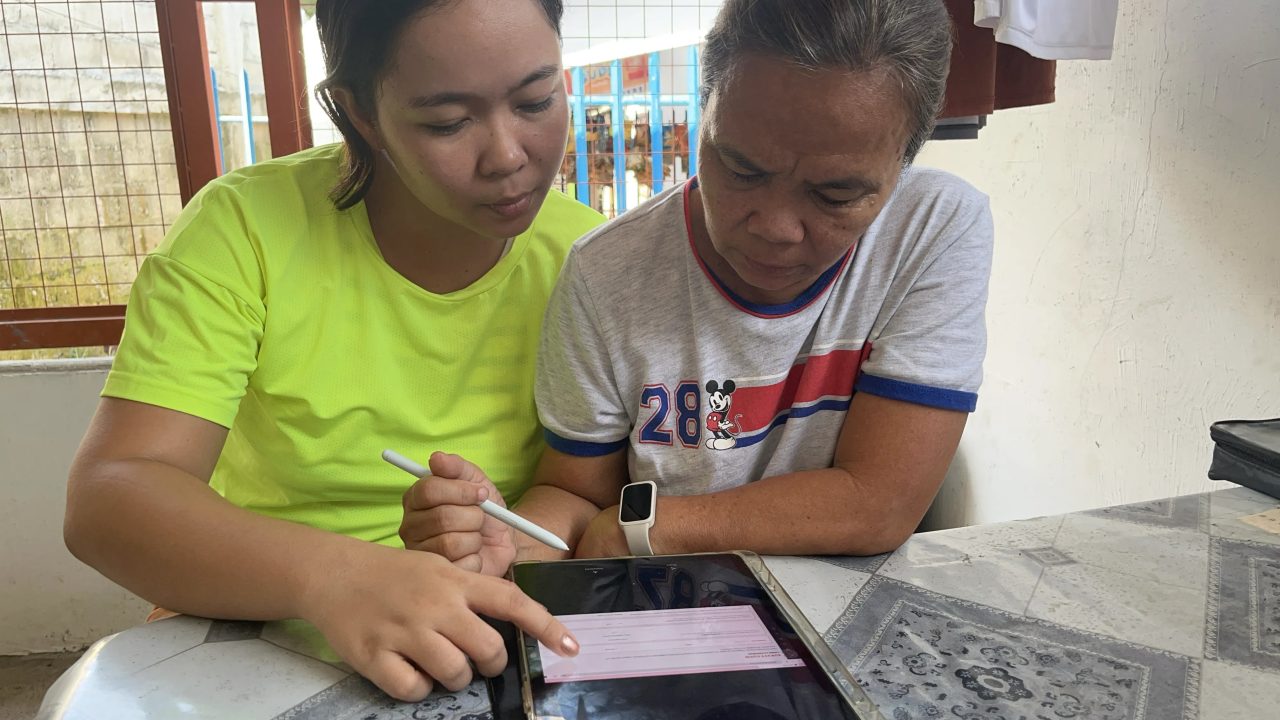
In the Philippines, food insecurity grips 37.8 million people, the worst in Southeast Asia. Ironically, smallholder farmers, who produce the country’s food supply, are trapped in a poverty cycle that prevents them from feeding their own families.
ARK Solves (ARK) is committed to changing that through Feed Back, a community-wide vegetable exchange that inspires families to grow their own food and produce excess that they can share and sell. It’s an admirable mission and a practical one: feeding families and increasing income in the process.
More Stories of Impact
In just six years, Feed Back has grown to 123 communities and 36,500 families, proving that the model is effective and scalable. To continue scaling responsibly, ARK tapped into networks and adopted systems that would extend its capacity beyond what the organization could achieve on its own.
“As we grow in scale, efficient data collection and processing becomes increasingly critical given our team’s limited bandwidth,” says Ana Katrina Santos, Impact Manager at ARK.
That’s where data.org and the Social Impact Data Science Accelerator (SIDSA) come in.
SIDSA was started by the Association of Pacific Rim Universities (APRU), a core partner in data.org’s Capacity Accelerator Network (CAN) Asia Pacific Hub. Through the program, social impact organizations (SIOs) like ARK are partnered with multidisciplinary academic teams to identify a challenge and develop a responsive data and AI solution. The close and ongoing collaboration ensures that when the project is complete, the participating SIO has the tools and skills necessary to sustainably deploy the solutions moving forward.
We want to give students the ability to learn something beyond what they can do at the university. We want them to work with real-world organizations on real-world challenges.
Christina Schönleber Senior Director of Strategic Partnerships & Innovation Association of Pacific Rim Universities (APRU)
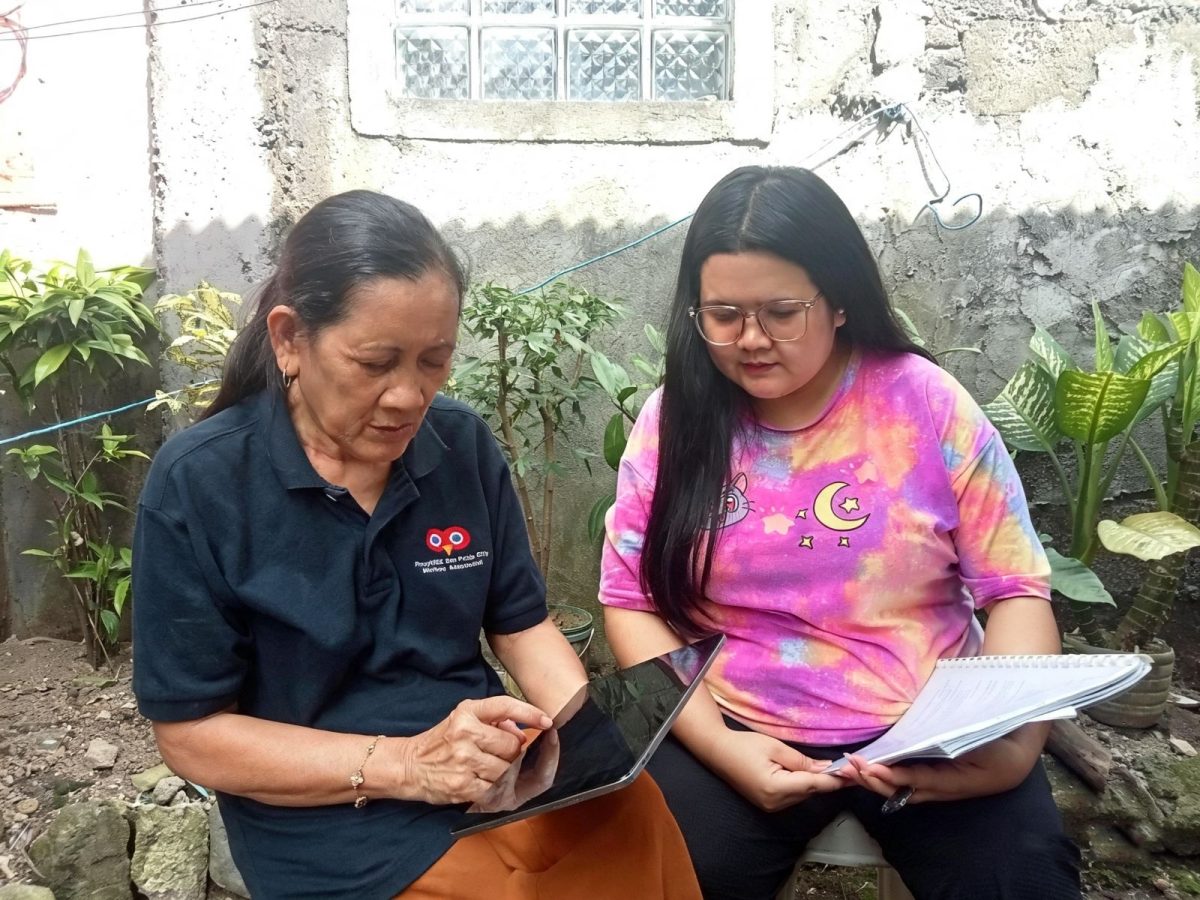
“We appreciate the expertise that the University of the Philippines (UP) brings. Like many other SIOs, ARK had limited technical background in data science and engineering. UP filled that gap and designed a data system and technology that would make data collection and processing more efficient,” shares Santos. “Beyond the output, our team is now more confident with technology.”
The academic team, too, built confidence through the process.
“It’s an opportunity for our students to learn beyond the theoretical,” says Darmae Tan, a computer science and software engineering professor at the University. “I hope this is the first of many more years of this program for my students.”
Because the benefits are not just for the social impact organization and the communities they serve. The program illustrates how classroom learning can be applied in students’ lives and careers, often opening up new professional pathways with a social impact lens.
“We want to give students the ability to learn something beyond what they can do at the university,” says Christina Schönleber, APRU’s chief strategy officer and a primary architect of SIDSA. “We want them to work with real-world organizations on real-world challenges.”
For this project, ARK identified the need for stronger data management and analytics. While the team could analyze data on time, working with separate family, community, and wave‑level databases consumed significant bandwidth, especially with weekly analysis and reporting to community partners.
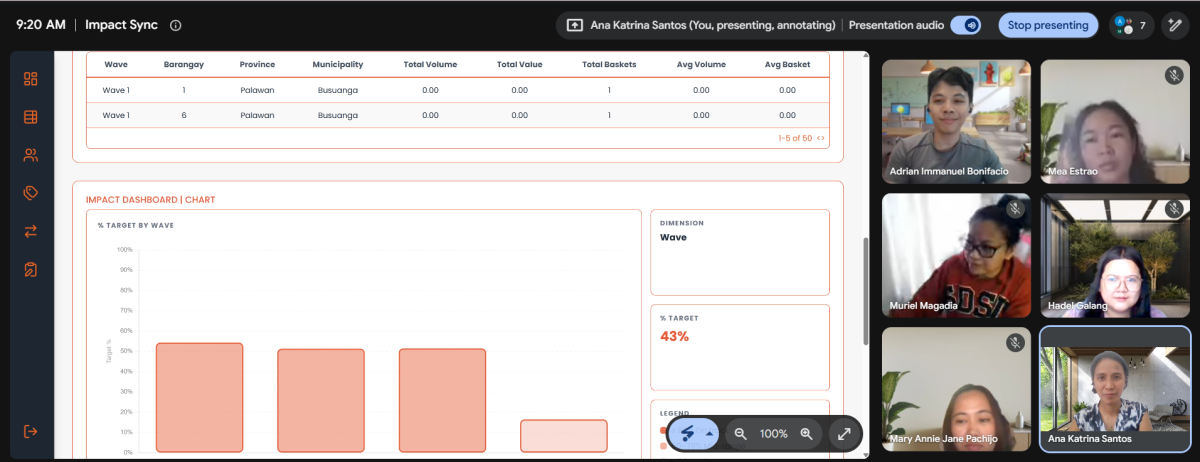
The project team delivered. UP designed an integrated system with mobile-based family-level data collection that feeds directly into a database that can aggregate at various levels, with an automated dashboard for easier reporting to partners. It is now for pilot testing.
Helping to develop that kind of practical and much-needed solution was exciting for Zachary Paul Matriano, a participating student at the University of the Philippines.
“This project was really a first for me in terms of putting my computer science knowledge into the world,” he shares. “I’m very grateful to have had this opportunity. It reminded me that, outside the classroom, there are many ways I can help people around me.”
Schönleber lit up when she heard Matriano’s description of the experience.
“It’s brilliant. It puts color into this concept. Before it was just black and white on paper, but it really is working.”