Learners
Enock Acheampong: Finding the missing link between climate data and health outcomes
For years, Enock Acheampong knew the data was there. As a health teacher at Ghana’s School of Hygiene and a PhD candidate researching environmental engineering, he had collected a wealth of information on how climate patterns were impacting cardiovascular and genetic health. But he lacked the tools to bring that data to life.
“I had always struggled,” he said. “I’d look for data scientists to help, but the connection was missing. When I joined the Africa CAN training, it finally clicked.”
The training offered by the Global Partnership introduced Acheampong to open-source data tools like Python and R, resources.
“Being introduced to new techniques was a game changer,” he said. “The training helped me run my first independent analysis. I’m now just seeking validation from a data scientist, but I know I’ve done the work.”
Beyond the technical skills, the delivery of the training itself stood out to Acheampong. As someone who had enrolled in several online programs in the past without finishing, he was surprised by how engaging the Africa CAN sessions were.
“This was the first online program I completed,” he noted. “The facilitators made the content so relevant, even though some moved a bit fast. But the sessions kept me engaged all the way.”
One lesson that stuck with him was on the importance of data cleaning, especially how to handle the messy outputs from “select all that apply” survey questions. “
Acheampong also credits the sessions for broadening his research scope. Previously focused on respiratory illnesses, Enock now explores links between climate and skin conditions, including rashes caused by heat waves, an idea sparked by a class discussion on pregnancy outcomes and environmental stress.
“The training helped me reimagine the way climate affects health. It’s not just the lungs anymore,” he said.
Sheila Humphrey: From policy gaps to pitching for impact
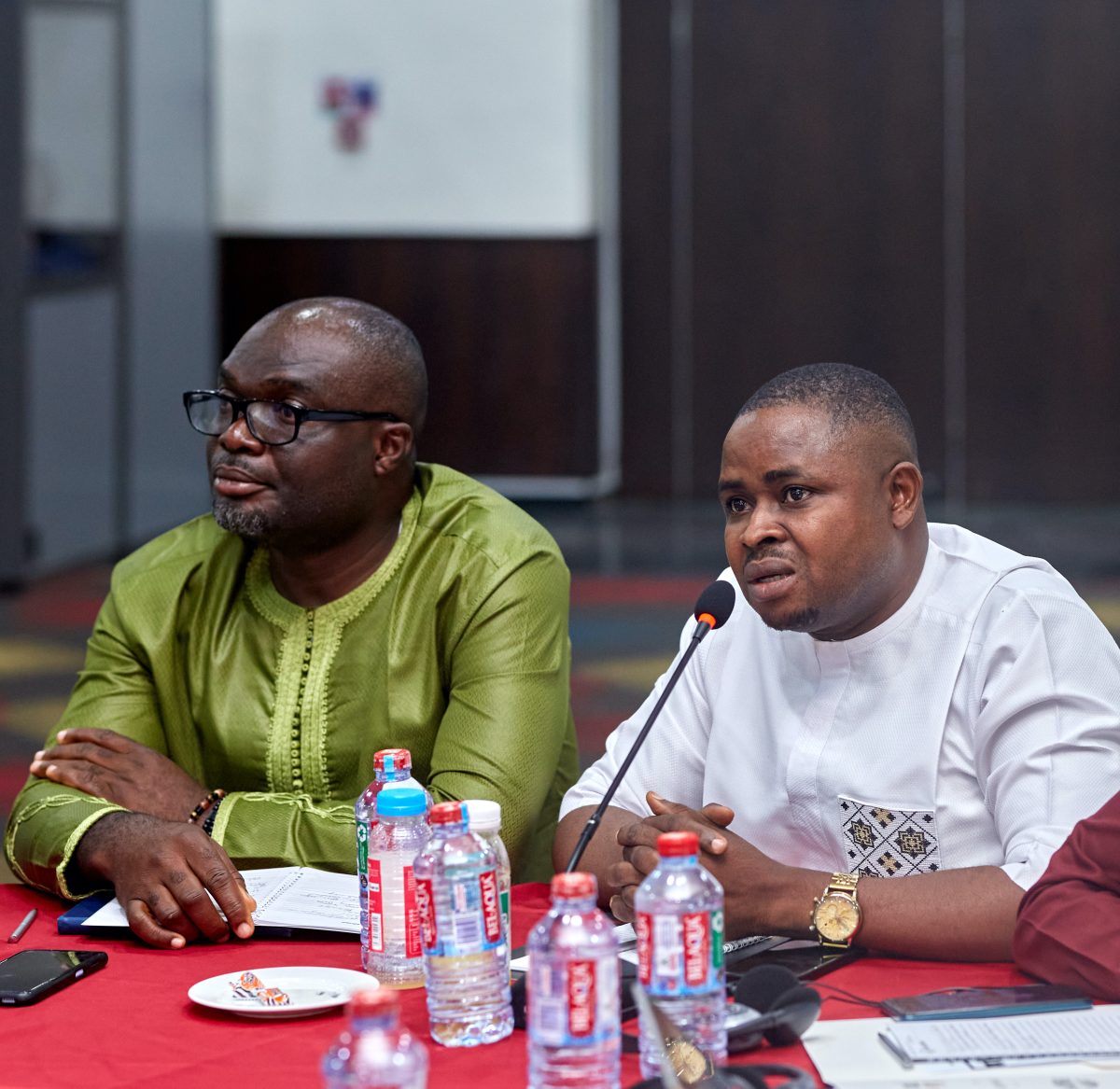
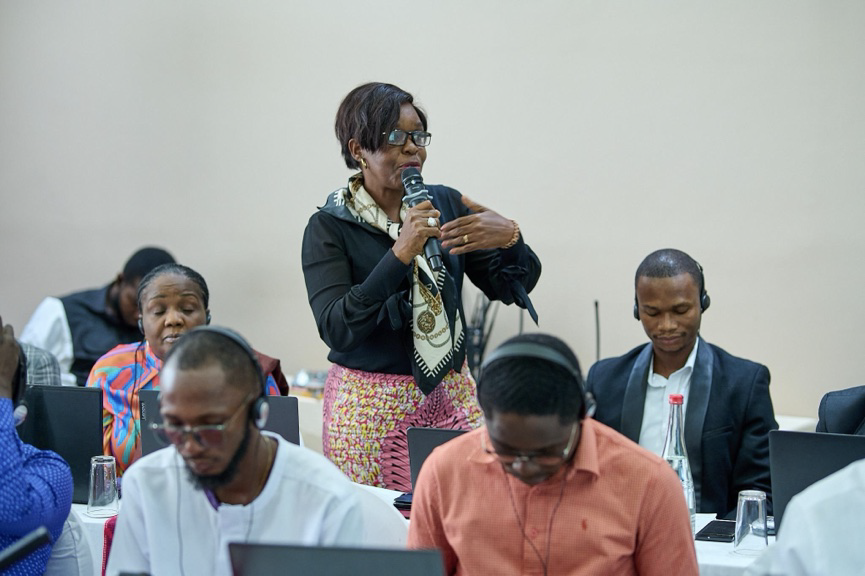
When Sheila Humphrey joined the Africa CAN workshop in Accra, she was already deeply immersed in research. As a research officer at Ghana’s Land Use and Spatial Planning Authority, she routinely engages with spatial data to inform national development policies.
“This was my first time participating in a CAN training,” Humphrey said. “Listening to participants from across the globe talk about data challenges and solutions helped me see our local issues in a new light.”
Whether it was flood risk mapping, healthcare access, or the use of drones for development, the themes echoed what she regularly saw in Ghana. “But what stood out was the global nature of the challenges and how often, like here, research ends up on a shelf.”
For Humphrey, the critical question was: how do we move from research to real impact?
“How are institutions collaborating? How is research informing policy and being institutionalized for the future?” she asked. “It’s not just a Ghana issue, it’s everywhere.”
One of the most impactful parts of the training for Humphrey was learning how to make a concise, three-minute pitch. Because she works with developers, ministries, diplomats, and the private sector, she needs the ability to quickly convey the value of a project.
“It’s a powerful approach,” she said. “If I meet an investor or decision-maker, I now have the confidence to pitch an idea that bridges spatial planning with sustainable development in just a few minutes.”
For Humphrey, it wasn’t just a training. It was a mirror and a megaphone, reflecting shared challenges and amplifying her voice for action.
Fellows
Beni Nzimba Makumbu: Building data skills to protect the Democratic Republic of the Congo’s lands
For Beni Nzimba Makumbu, becoming an Africa CAN Fellow was more than just a professional milestone. It was a turning point. It gave him the tools, structure, and mentorship he needed to take on one of the Democratic Republic of the Congo’s biggest environmental challenges: land degradation.
“As an Africa CAN Fellow, I didn’t just learn new techniques. I gained the confidence to apply them where they matter most,” Beni said.
Placed with the Ministry of Environment and Sustainable Development, Makumbu set out to analyze the extent of land degradation in Lubumbashi, a city where mining and deforestation have taken a severe toll on local ecosystems. With support from the Africa CAN program, he learned how to use remote sensing technologies, time series modeling, and platforms like Digital Earth Africa to map and forecast land conditions.
Although the original plan included field surveys to link land degradation with household health data, Makumbu and his mentors quickly adapted when faced with resource and logistical constraints. Instead, he pivoted to focus solely on satellite data and built a robust geospatial analysis pipeline using Normalized Difference Vegetation Index indicators and the Box-Jenkins modeling approach. The result was a set of data tools and visualizations that helped fill a critical knowledge gap for the ministry.
“The fellowship helped me adapt quickly and think creatively when things didn’t go as planned,” he said. “Even with limited field access, we created something that can influence real decisions.”
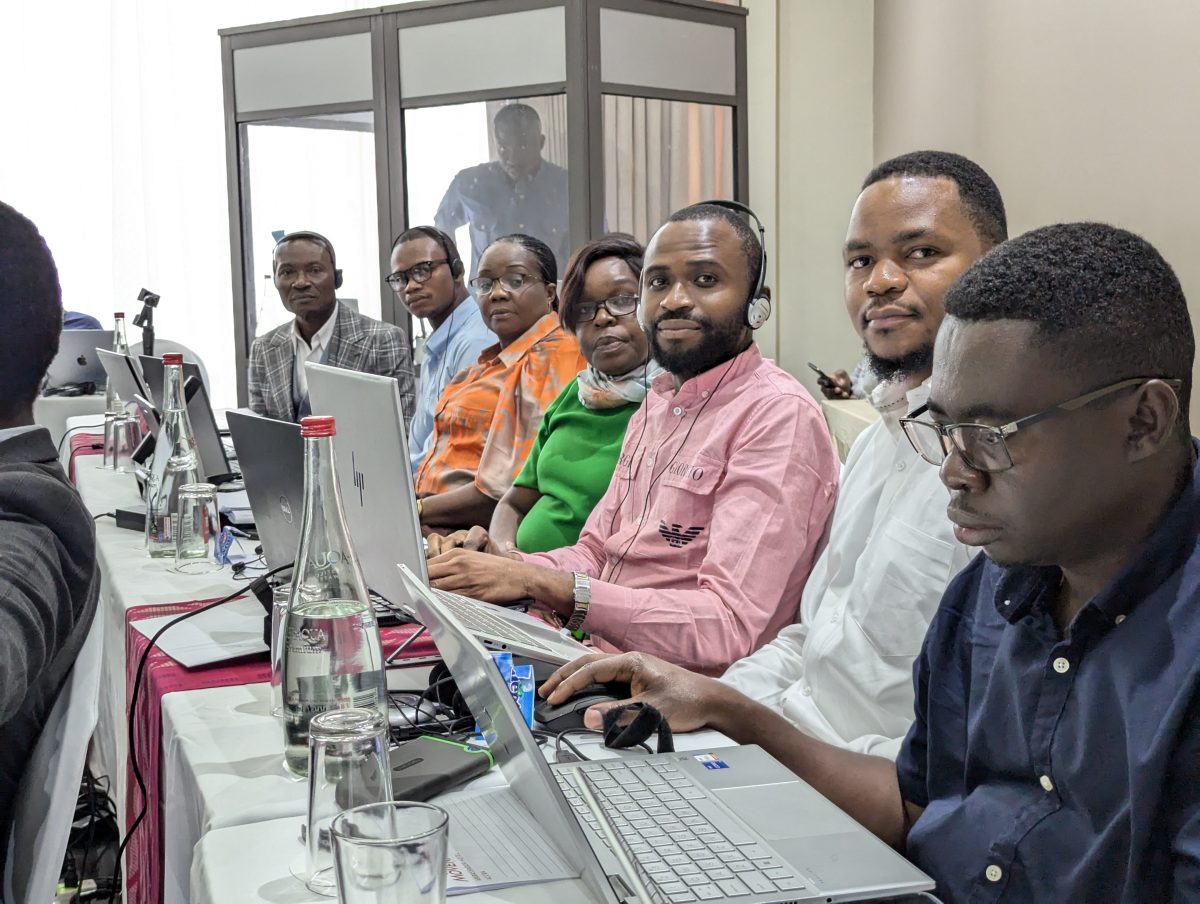
Beyond the technical achievements, the fellowship deepened Makumbu’s understanding of how to work within institutional systems. He conducted hands-on training for two ministry staff, helping to build internal capacity in data analysis and geospatial tools. His work now supports future land use planning and forest conservation strategies in Haut-Katanga province.
Makumbu credits the Africa CAN Fellowship not just for the skills it provided, but for the long-term vision it helped him form.
Mohamed Gele: Using data to break the cycle of food insecurity in Somalia
Mohamed Gele, an African CAN Fellow from Somalia, established a connection between food insecurity, climate change, political instability, and displacement in his country. As a data analytics advisor to the Somali government, he joined the Fellowship to explore how data science and climate modeling could help address the country’s worsening crisis of child malnutrition.
“In Somalia, we face many challenges, but for me, food insecurity is the most pressing,” he said. “Because of food shortages, people are displaced, violence increases, and political stability deteriorates.”
During the fellowship, Gele led a research project that used data science to predict child malnutrition, specifically stunting and wasting, based on crop yields and climate variables such as drought and extreme precipitation. Somalia’s food systems, he explained, are largely rain-fed and heavily reliant on staple crops like maize and sorghum. When drought strikes, yields plummet. In 2022, for instance, maize yields dropped by 32 percent and sorghum by 40 percent. That same year, the rate of child wasting rose sharply from 10 to 16.2 percent.
“I used crop yield data and indices like the Standard Precipitation Index,” he explained. “The model showed strong correlations between climate shocks and child malnutrition.”
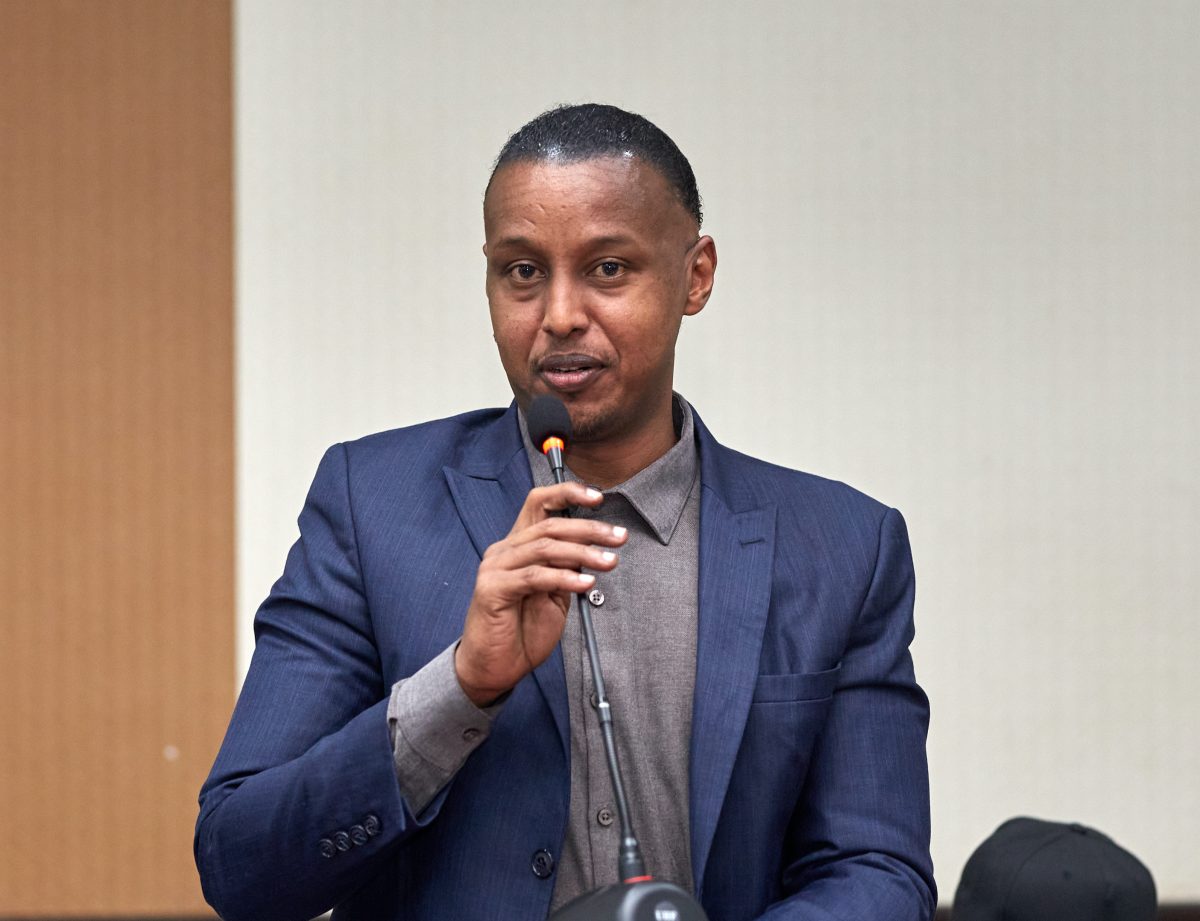
Gele also built future scenarios using IPCC climate pathways to forecast Somalia’s nutritional outlook from 2025 to 2050. Even under optimistic green-growth models, his analysis showed that without coordinated, data-driven public policies, child malnutrition rates are likely to persist or even increase.
“The lesson is clear: without multisectoral, data-informed policymaking, the risks of child malnutrition and national insecurity will continue to rise,” he said.
For Gele, the Africa CAN Fellowship provided more than technical training; it offered a transformative experience.
“It completely changed my perspective on food security and child malnutrition,” he said. “Even as a parent, I became more aware of indicators like stunting and wasting. I now understand what they truly mean.”
He also witnessed the potential of data science in the public sector. “Emerging technologies like machine learning are still new in Somalia’s government institutions. This presents a huge opportunity for more informed, cost-effective decision-making,” he noted.
The fellowship encouraged him to take ownership of his ideas, design original research, and present his findings to diverse stakeholders.
“I had done reporting before,” he said, “but this was different. Designing a concept, doing the analysis, and presenting the findings gave me the confidence to develop and communicate scientific research at a global level.”
Today, Gele is advocating for stronger technical capacity within Somalia’s ministries, particularly in public health, climate, and agriculture and for greater awareness of malnutrition among both policymakers and communities.
“This fellowship didn’t just open new doors. It showed me I can contribute not only nationally, but globally,” he said. “It gave me the confidence to say: I am a scientist.”