Core partners
The Global Partnership for Sustainable Development Data

The Global Partnership is a network of more than 700 organizations based in more than 80 countries, spanning governments, academia, civil society organizations, and the private sector, working together to use the power of data to achieve the Sustainable Development Goals (SDGs).
The organization’s 2024–2030 strategy envisions a world where data and technology are driving sustainable and equitable development. In practice, this looks like:
- Strengthening national data systems that use data and technology from across the public and private sector for timely decision-making.
- Making inclusion the norm, putting people at the center of data production, sharing, and use so that their experience is visible and the power of data is used to fight inequality.
- Shaping how data is governed, ensuring it is accountable to those whom the data is intended to serve.
data.org

data.org is accelerating the power of data and AI to solve some of the world’s biggest problems. By hosting innovation challenges to surface and scale groundbreaking ideas, and elevating use cases of the most effective tools and strategies, the platform is building the field of data for social impact. By 2032, data.org will train one million purpose-driven data practitioners, ensuring there is capacity to drive meaningful, equitable impact.
Africa CAN was launched by the Global Partnership and data.org, with support from the Wellcome Trust, to build expertise in using climate and health data for social impact. Designed as part of data.org’s broader Global Data Capacity Accelerator initiative, the Africa Climate and Health Data Capacity Accelerator Network brought together partners, including the African Population and Health Research Center and OpenUp, to train and support purpose-driven data practitioners. The program aimed to strengthen data capacity across government and impact sectors by equipping a new generation of talent to tackle pressing challenges at the intersection of climate and health through data science and analytics.
Africa CAN encompassed several key components: a three-month training on working with climate and health data; the Fellowship, where learners from the training provided real-world use cases for experienced Fellows to solve; capacity-building workshops that homed in on specific data-related subjects; and networking events and activities.
The program began with the data science training, followed by experiential learning through the fellowship scheme, and aimed to build a robust data ecosystem that empowers communities and drives impactful solutions for sustainable development.
The initiative’s primary objective was to build data capacity by strengthening the skills and capabilities of data professionals, enabling them to tackle pressing challenges.
- Annual three-month data analysis training: Following an open call for applications, the training offered a practical introduction to data science, types of health and climate data, and real-world applications.
- The CAN Data Science Fellowship: After the training, emerging data professionals had an opportunity to apply for a fellowship, a five or six-month engagement that offered hands-on experience with a host institution supporting a use case, or to conduct research, and the chance to apply their data skills in the real world. (There were eight Fellows in cohort one, ten in cohort two, and five in cohort three.)
- Capacity-building workshops: One-off complementary workshops on specific topics were held to deepen the skills of data practitioners and offer opportunities for collaboration.
- Collaborative projects and networking events: A range of activities fostered collaboration, peer-to-peer learning, knowledge exchange, and strategic partnerships.
The Africa CAN training
The Africa CAN training was designed to provide learners with a comprehensive and practical introduction to data science in climate and health, covering data collection, analysis, visualization, machine learning, communicating with and about data, cutting-edge tools, ethics, governance, and more. It was delivered through a mix of live virtual sessions, recorded lectures, assignments, quizzes, and case studies. The training included diverse learners from government agencies (ministries, departments, and statistical offices), academia, the private sector, and civil society. Learners were also mentored by experienced data scientists and instructors from the training providers. More than 200 data practitioners were trained in data science and its application in health, climate, and related topics over a three-year period.
For more information on the training curriculum, see this chapter 4.
The Africa CAN Data Science Fellowship
A total of 22 data professionals from 11 African countries were placed in paid data fellowships.
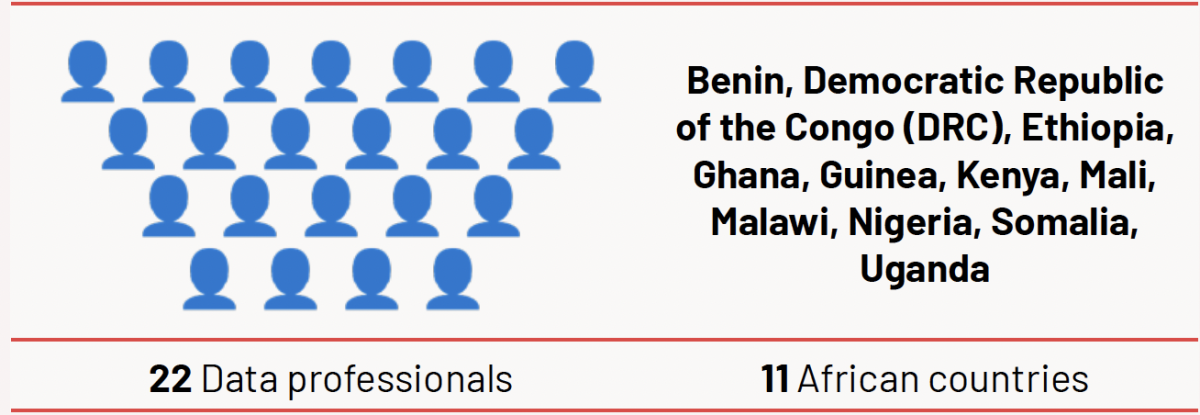
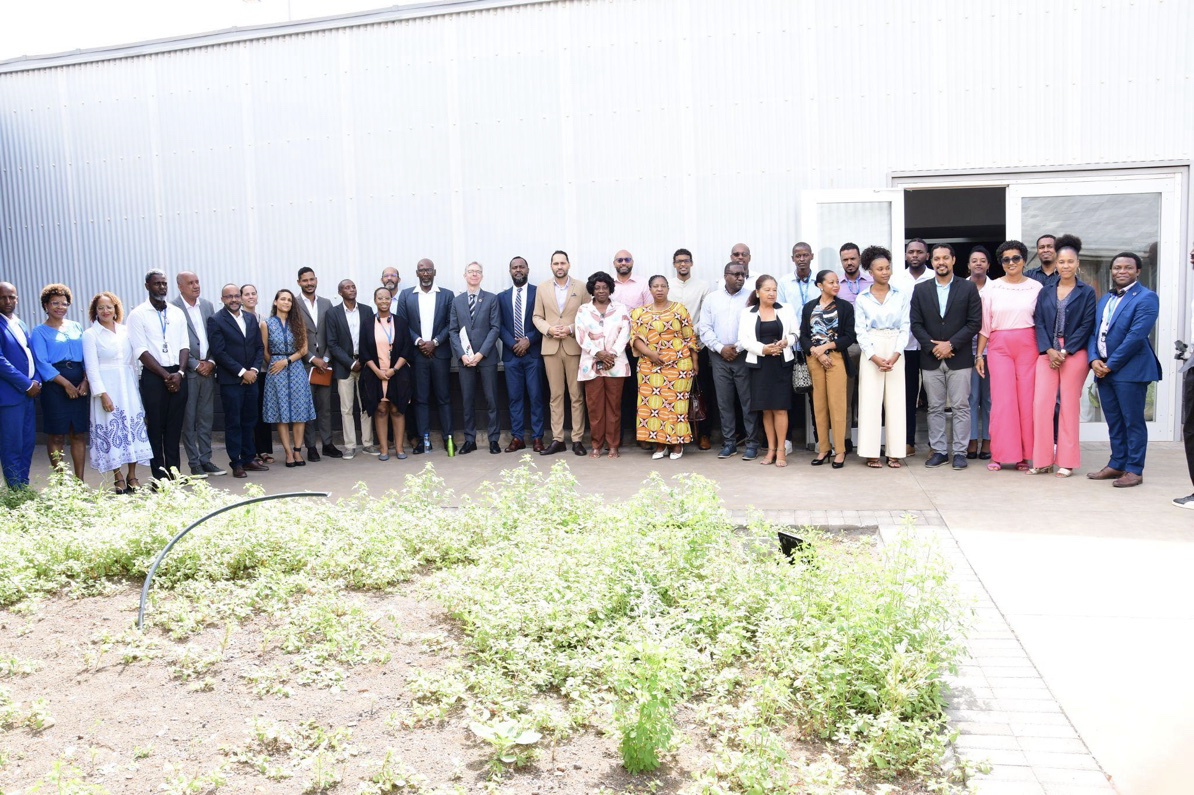
The fellowship program, which provided data professionals with hands-on experience, was central to Africa CAN. Participants focused on identified, country-specific use cases (projects), working with host institutions and sectoral experts to apply their knowledge and break new ground in the use of climate and health data. In doing so, they increased their data skills, boosting demand for data among public and social impact organizations, developing innovative solutions, and building the capacity of the organizations they worked with to use data more effectively in the future.
The fellowship included practical project work, media training, and opportunities for Fellows to present their work at local, regional, and international events, aiming to produce a network of data professionals committed to sustainable development.
To find out more about the Africa CAN Fellows and their work, read selected case studies and browse profiles of all Fellows, and learn about some Fellows’ journeys.
How a CAN campaign sparked interest, connection, and community
In August 2024, the Global Partnership team launched a storytelling campaign to spotlight the work of Fellows and build awareness about the program. By focusing on real people and real impact, the campaign helped people understand what Africa CAN is all about and why it matters.
A wave of interest
As the stories rolled out through newsletters, social media, blogs, and videos, interest in Africa CAN surged. The campaign resulted in the highest organic traffic of the year on the Global Partnership website: over 109,000 visits in August and 96,000 in September. People did not just visit. They stayed to read, watch, and explore, leading to more than 600,000 interactions during those two months.
Shared through the right channels
The campaign reached people through a mix of direct links, search, social media, and email.
- More than half of all traffic (52.8%) came through direct links, showing the power of community-based sharing.
- Search accounted for 21.3% of visits, with many people discovering Africa CAN through what they were already looking for.
- Social media contributed 10.9% of traffic, and email campaigns added another 6.1%.
Real stories, lasting impressions
As of May 2025, 16 Africa CAN videos had been produced and shared, garnering more than 12,000 views on YouTube. More videos are in development. These short, human-centered stories helped bring the projects to life and made the case for why this work matters.
A growing network across the continent
The storytelling campaign contributed to the growth of a connected community of more than 1,100 African data scientists, researchers, and learners (as of May 2025). Many discovered Africa CAN through these stories and chose to stay engaged.
High demand, strong momentum
Across the three application rounds, the Africa CAN Fellowship received more than 5,000 applications, a strong indicator of the relevance and reach of the program.
Capacity-building workshops
In addition to the core training, Africa CAN held a number of capacity-building workshops. These standalone events were designed to boost the skills of data practitioners and stakeholders by going in-depth into specific, impactful areas such as advanced data analytics and tools, developing climate and health data applications, data storytelling and visualization, and effective communications strategies. They provided technical training, promoted best practices, and supported ongoing learning among participants.
For more information on Africa CAN workshops, see this chapter.
Collaborations and networking events
Africa CAN also facilitate collaborative projects by bringing together data professionals, SIOs, and government agencies to address climate and health challenges in peer exchange events. These events and projects promoted interdisciplinary collaboration, developed scalable solutions, and demonstrated the impact of data-driven approaches.
Africa CAN aimed to create opportunities to drive advancements in sustainable development through strategic partnerships with academic institutions, nongovernmental organizations (NGOs), and private-sector organizations. These partnerships strengthened the data ecosystem and amplified impact, contributing to the program’s success.
What sets Africa CAN apart?
The Capacity Accelerator Network is a really important program for us because it is providing the opportunity for experiential training, to empower our partners with the technical skills needed to apply new tools and methods when it comes to data science.
Davis Adieno, Global Lead, Innovation for Business Development, Global Partnership
Part of Africa CAN’s success came down to the union of data science with sectoral expertise. Through the fellowship, professionals with strong data skills who perhaps lacked the experience to apply those skills within a certain sector (such as health or transport) were paired with government departments and social impact organizations with domain expertise in a particular sector (but who may have lacked technical skills). As Davis Adieno, Global Lead for Innovation for Business Development at the Global Partnership, says: “This is where the magic happens.”
The result was a partnership that sparked innovation and new ways of solving complex problems. Fellows and host organization mentors worked together and learned from each other. By the end, you had data scientists who understood how to apply their skills within a particular sector, and government officials who were better equipped to use and interpret data to solve problems.
Now I have a lot of skills in GEO-LDN tools, and I can support partner organizations and other organizations that are also championing land degradation neutrality.
Clement Danso, Africa CAN Data Science Fellow (Ghana), cohort one
The network that was built around Africa CAN set it apart from other initiatives. Africa CAN connected Fellows and host institutions from different countries to discuss which approaches worked and what could be replicated in other countries. For example, through the program an official from the Ministry of Environment in the Democratic Republic of the Congo connected with an official in the Ghana Statistical Service Environment Department to exchange knowledge and share what did and didn’t work when it came to using data more effectively.
CAN gave me an opportunity to make an impact to my country.
Agnes Okero, Africa CAN Data Science Fellow (Kenya), cohort one
Africa CAN made significant strides in building data capacity and fostering innovation across Africa. This included developing predictive models for climate resilience, creating data-driven health prevention and intervention strategies, and fostering collaborative projects with local partners.
The power of the network created around Africa CAN increased the impact of this work even further, with tools developed in one country being shared with other nations. For example, in Nigeria, Africa CAN Fellow Abubakar Isa-Abubakar developed an innovative data collection tool with support from GEO-LDN, one of the partners in the Africa CAN program. This tool will become part of the GEO-LDN toolbox (a suite of tools for addressing land degradation), where it can be used around the world to support informed decision-making and policy development.