Overview
The Capacity Accelerator Network is about investing in the next generation of data talent across Africa, equipping professionals with the skills they need, where they’re needed most, to help governments and civil society tackle pressing challenges like climate change, health crises, and food insecurity. It’s about creating a pipeline of capable leaders who can drive data-driven solutions from within the continent
Claire Melamed, Chief Executive, Global Partnership
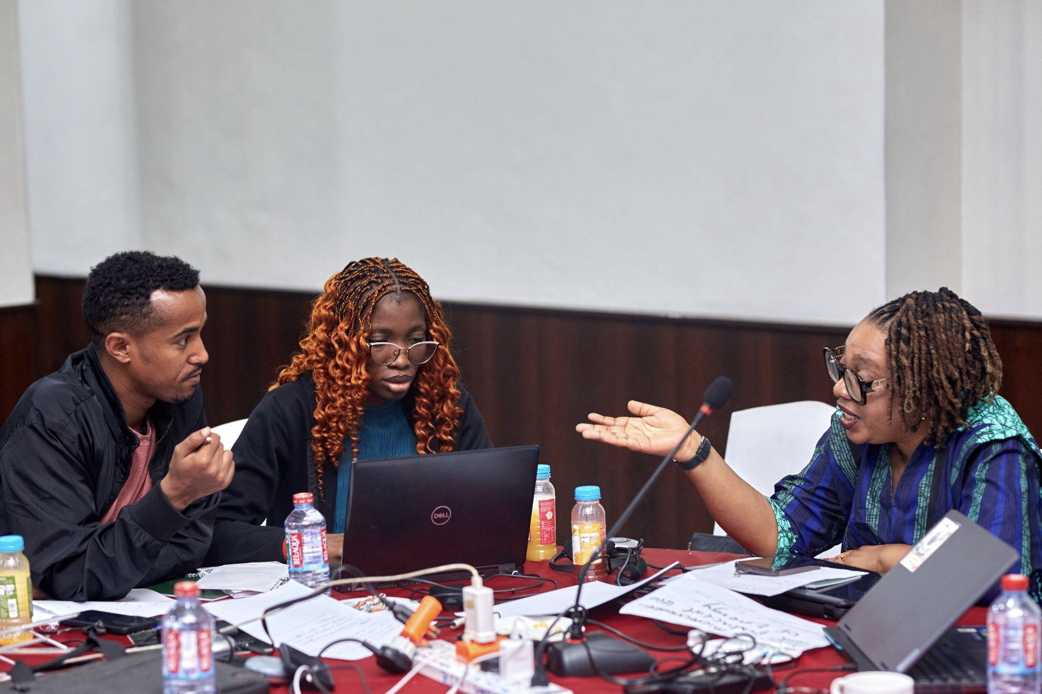
In Africa, a continent facing multiple, complex, and interrelated threats from climate change, data science is proving to be a powerful tool to generate insights, inform decisions, and drive action. To unlock the full potential of data science in Africa, we need better, more accessible data and more people with the skills to analyze and interpret it. Increased data science education, training, and mentorship can help to overcome these challenges and yield more data-driven applications that are relevant, inclusive, and sustainable.
To build the workforce of tomorrow—one that is skilled in leveraging data and AI—it is critical that we work across both supply and demand. Through CAN partnerships with colleges and universities around the world, we are increasing the supply of data talent, but that alone is not enough. By engaging governments, NGOs, and nonprofits for experiential learning and fellow opportunities, we are creating opportunities to tackle real problems with practical data and AI [artificial intelligence] solutions, and investing in the future workforce.
Cormekki Whitley, Chief Operating Officer, data.org
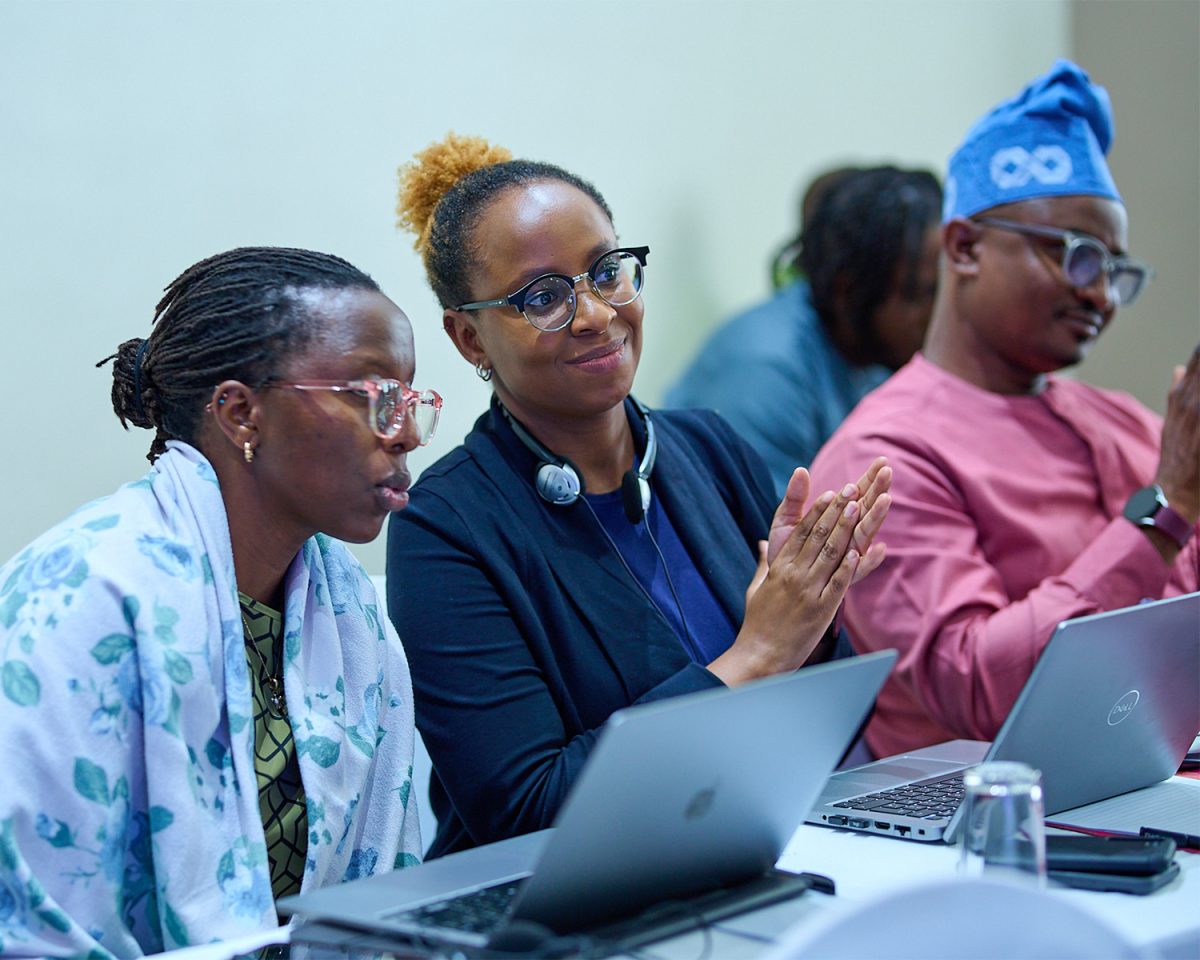
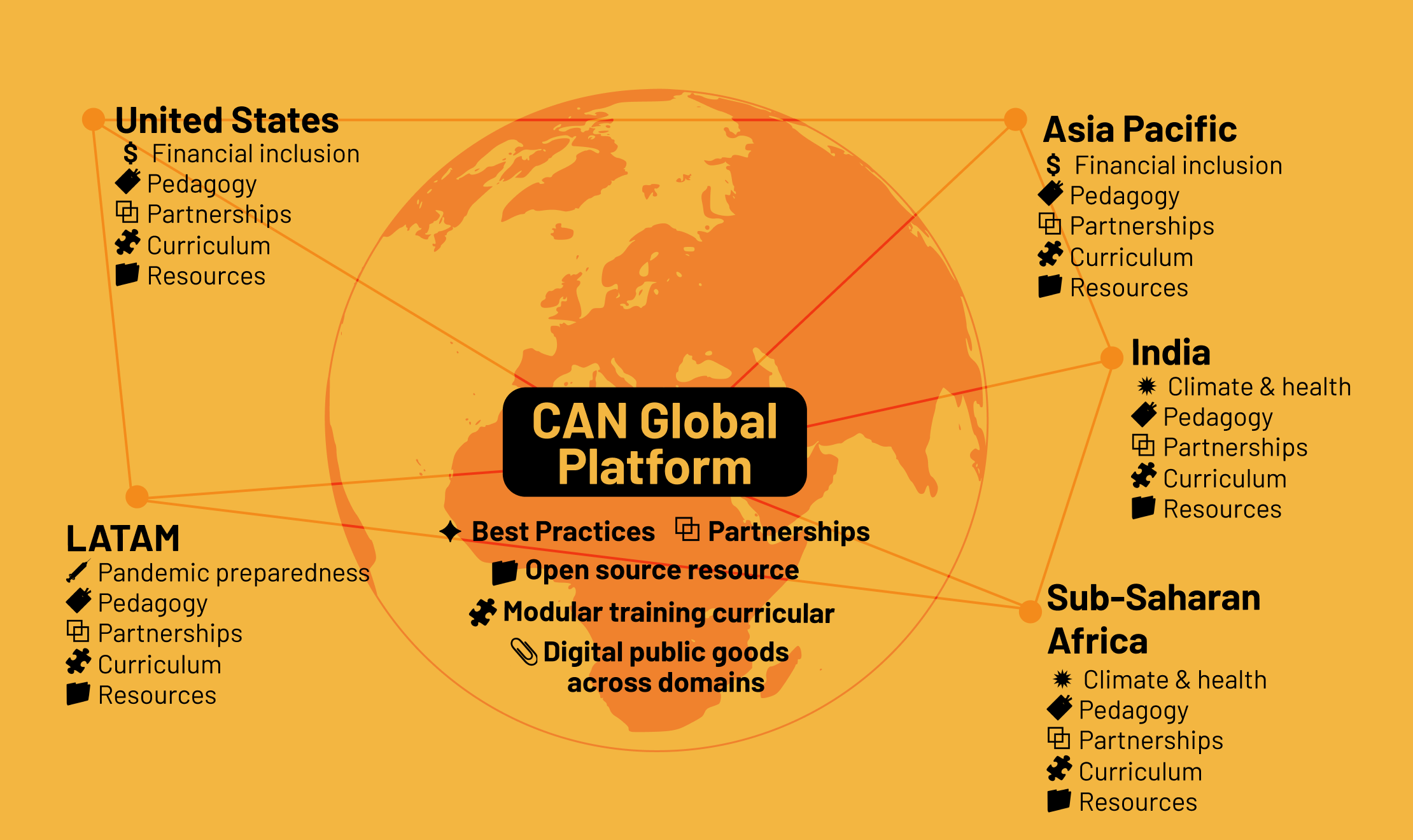
Enter the Africa Climate and Health Data Capacity Accelerator Network (Africa CAN), established by the Global Partnership and data.org and supported by the Wellcome Trust, which had its inaugural run between 2022 and 2025. This accelerator was part of a wider global network of networks powered by data.org, with other hubs in the United States, India, Latin America, and the Asia Pacific. The Africa CAN empowered emerging data professionals across the continent to work with climate and health data to help countries build resilience and respond to interconnected climate and health crises and threats.
The Capacity Accelerator Network is a global “network of networks” conceptualized by data.org in 2020 to build data and AI capacity for social impact across regions. With active hubs in the United States, India, Latin America, the Asia Pacific, and Africa, CAN is reimagining how to equip a purpose-driven, future-ready workforce with the skills to address real-world challenges through data.
The Africa Climate and Health Data Capacity Accelerator Network (Africa CAN), which the Global Partnership ran from 2022 to 2025, applied this model to the intersection of climate and health in Africa. With support from the Wellcome Trust, data.org, and over 50 global and regional partners, Africa CAN combined data science training, fellowships, and strategic convenings to strengthen data ecosystems and empower institutions across the continent.
To unlock the underutilized potential of data for social impact, a significant investment in diverse, high-quality talent is critical. In recent years, professionals from fields like engineering, public policy, healthcare, and management consulting have begun to apply data skills to complex societal problems. According to data.org’s 2022 Workforce Wanted report, up to 3.5 million data for social impact jobs could be created in low- and middle-income countries by 2032 if labor markets are sufficiently supported. CAN is an answer to this call, mobilizing data professionals through hands-on learning, cross-sector collaboration, and global exchange.
In Africa, the Global Partnership has played a pivotal role as a network convener: brokering partnerships, enabling ethical data sharing, and connecting data fellows with host institutions to co-create solutions. Through Africa CAN, the Global Partnership fostered a collaborative community of government ministries, statistical offices, social impact organizations, climate experts, and health professionals.
Africa CAN combined climate, health, and data science training with experiential learning through a fellowship program that focused on identified, country-specific use cases, enabling participants to work with governments and social impact organizations (SIOs) to apply their data skills. Host organizations benefited from Fellows’ technical expertise, while Fellows gained domain knowledge in various sectors as they addressed real-world problems. This fusion of skills created environments where relationships were strengthened and innovation flourished, giving rise to new, data-driven approaches to tackling some of the most pressing challenges of our time—crucially, with the potential to improve lives across the continent.
From 2022 to 2025, 254 learners took part in data science training, and 23 Fellows were selected across three cohorts. Fellows’ work with governments and SIOs included:
- Using new data sources, such as Earth observations, and analysis to map and address land degradation in Nigeria and the Democratic Republic of the Congo.
- Using machine learning to identify how environmental factors are driving cholera outbreaks in Yobe State, Nigeria, facilitating surveillance, prevention, and response.
- Combining climate, health, and food systems data to help smallholder farmers build resilience against floods and droughts and improve nutrition in Kenya.
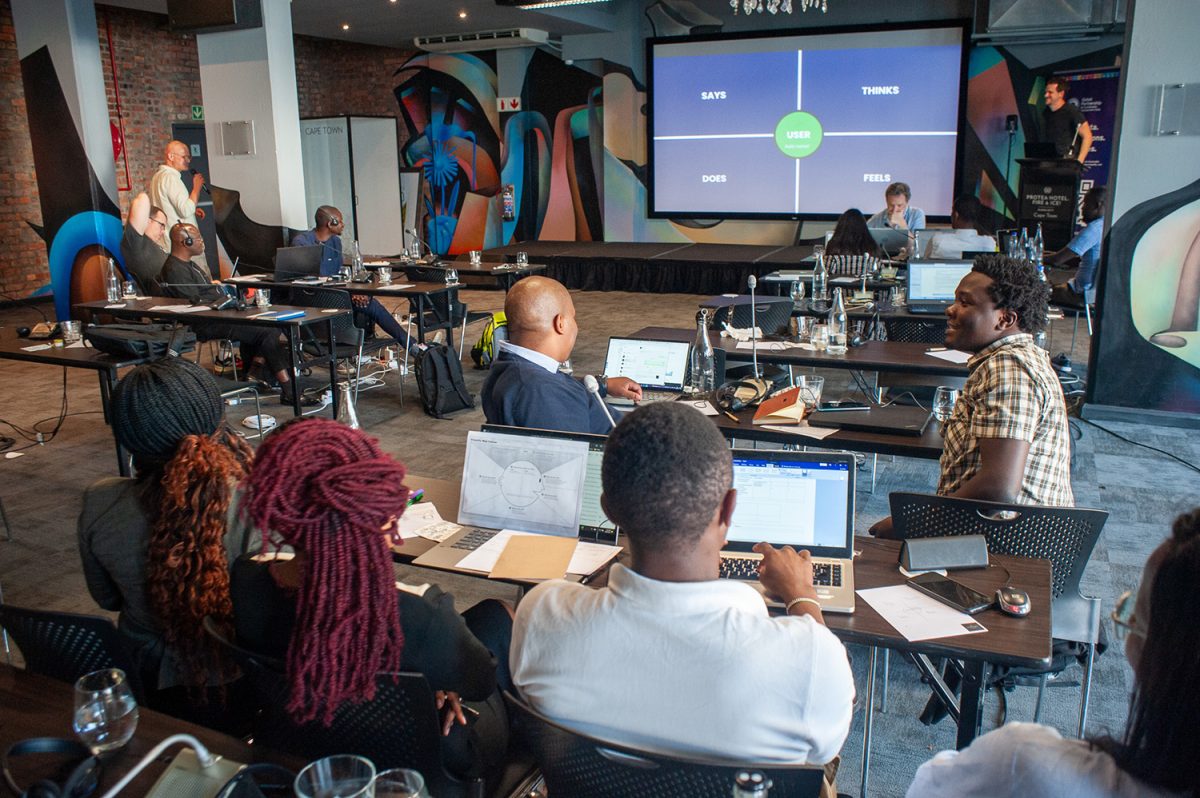
Alongside its core data science curriculum, Africa CAN also offered regular one-off capacity-building workshops in areas such as data analytics and data visualization, along with opportunities for networking and learning exchange, all designed to upskill and support governments and SIOs to use data more effectively. The goal was to build up a network of institutions working on climate and health data and learning from each other. The power of the network created around Africa CAN magnified the impact of this work, as solutions developed in one country were shared with other projects and nations.
This playbook is designed to offer a behind-the-scenes look at Africa CAN, giving insight into how it worked, the structure of the program, the impact, and lessons learned. The goal is to offer inspiration for learners wanting to use data science for social good, for funders keen to support this type of initiative, and for organizations interested in joining a future iteration of the program or developing a similar venture.
Benefits of this playbook
This playbook aims to offer insights and inspiration for anyone interested in using data science to tackle complex and interrelated climate and health challenges. This target audience includes:
- Partners: Government institutions or social impact organizations looking to get involved in CAN or that are seeking to set up a similar initiative.
- Learners: Data science professionals keen to apply their skills to complex climate and health challenges, whether through CAN or similar climate and health data programs.
- Supporters: Funders looking to support impactful, data-driven approaches to tackling some of the most pressing climate and health issues of our time.
For partners
If you’re interested in getting involved with CAN or implementing a similar initiative, this playbook can help you to:
- Find out more about the structure of CAN, how the model works, and how (and why) it has evolved since its inception.
- Identify the benefits of bringing together theoretical learning with experiential practice through the data science training program around which the fellowship was structured. The phased approach to CAN is an essential element of the program, enabling Fellows to put their sharpened data skills into practice and tackle real problems.
- Understand the impact of the program so far and key lessons learned from the network.
For learners
If you’re a data professional interested in taking part in a future CAN training to develop your data skills or apply them to pressing climate and health challenges, this playbook can help you to:
- Find out more about what the CAN training offered, including the key themes, topics, and areas of focus for making the greatest impact.
- Read case studies of fellow data scientists who went through the program and learn about how they used their data skills for public good.
- Learn about the power of working with partners to apply your technical skills to tackle real-world problems.
For funders
- Read about the potential for using better data and data science skills for tackling some of the most pressing challenges of our time.
- Learn about the structure of CAN and how the combination of data science training and experiential learning is having a positive impact across Africa.
- Discover the impact CAN is having on people’s lives across the continent, and how the power of the network that has been created around CAN is helping to amplify this significantly.
How to use this playbook
This playbook is designed to support the use of data science skills to tackle pressing challenges at the intersection of climate and health. By sharing the structure of Africa CAN, the impact of the program, and the insights and lessons learned from running the accelerator, we hope to inspire those looking to use or support the use of data skills for the public good.
Rather than providing a step-by-step process to follow, the playbook offers inspiration and ideas from the different elements of the program, including what has worked well and how the initiative has evolved. It shares key things to consider when using data to tackle real-world challenges, with chapters you can dive straight into depending on your needs.
For example, after reading the introduction, an emerging data scientist might be particularly interested in chapter 2, which offers an overview of the structure of Africa CAN and the benefits of combining theoretical data science training with practical application of those skills through the fellowship; chapter 4, which outlines the training curriculum and the particular areas of data science and analysis Africa CAN focuses on; chapter 5, which features case studies of previous Africa CAN Fellows and their inspiring projects; and chapter 9, which collates lessons learned from running the program.
Potential funders looking to ensure their resources will have an optimal social impact might be interested in chapter 3, which looks at the role the Global Partnership and Africa CAN networks are playing in helping partners to exchange learning, amplify impact, and scale innovative tools and approaches. They may also want to read case studies from the program before heading to chapter 8, which offers insight into how Africa CAN’s progress and impact was measured and evaluated.
We hope this playbook will be a valuable resource for anyone looking to strengthen capacity for data skills and analysis within organizations and countries, and to apply these skills to solve pressing societal challenges, in Africa and worldwide.
About the playbook
Aims
This playbook aims to offer insights and inspiration for anyone interested in using data science to tackle complex and interrelated climate and health challenges.
Scope and limitations
This resource offers a detailed look at how CAN was structured, and lessons learned from working with emerging data scientists, governments, and organizations in countries across Africa. However, it’s important to keep in mind that there is no one-size-fits-all approach to running this type of program; what works in one country or context may not work in another, and elements may need to be tailored to ensure everyone gets the most from the experience.
That said, there are some key principles underpinning CAN that we believe will support any similar program looking to use data to tackle complex, interrelated challenges. These include the power of:
- Combining data science training with experiential learning through the fellowship program, enabling data scientists to apply their sharpened data skills to real-world problems.
- Creating environments that foster innovation, by blending data science skills with domain and sectoral expertise.
- Building the capacity for working with data within the public sector and social impact organizations.
- An engaged network of partners working together to share best practices, scale effective tools and approaches, and amplify impact.
- AI: Artificial intelligence.
- CAN: Capacity Accelerator Network, which is set up as a network of networks globally.
- Africa CAN: The Africa Climate and Health Data Capacity Accelerator Network.
- GEO-LDN: The Group on Earth Observations Land Degradation Neutrality Flagship, an initiative launched in 2018 to bring together Earth observation data providers and governments to share datasets and resources to monitor and tackle land degradation. GEO-LDN helps governments access data and tools to prioritize interventions, manage land better, and report on SDG indicator 15.3.1.
- Global Partnership: Global Partnership for Sustainable Development Data.
- MEAL: Monitoring, evaluation, accountability, and learning.
- NGO: Nongovernmental organization.
- RCMRD: Regional Centre for Mapping of Resources for Development.
- SDG: United Nations Sustainable Development Goal.
- SIO: Social impact organization—an organization focused on working for the public good and creating positive social or environmental change.